
The Last of Us is one of those rare games that transcend the medium itself. It isn't just an excellent video game. It's a story that stays with us long after the final credits — an experience that continues to be discussed, analyzed, and revisited more than a decade after its original release. And perhaps that's precisely why, between remasters, remakes, and re-releases, the game is already starting to rival GTA V and Skyrim in the informal competition for the title of "most republished game in history."
The joke is inevitable. But the truth is that, whenever we return to The Last of Us, we end up understanding why it keeps receiving so much attention.
This new version doesn't change the essence of the masterpiece Naughty Dog created. The story is exactly the same. The moments that marked us are still there. The characters who won us over, too. However, there's something special about revisiting this journey with current technology and realizing the care placed into every detail of this recreation.
Even knowing exactly what's going to happen — even knowing every twist, every loss, and every landmark moment — The Last of Us still has an impressive emotional impact.
That's an extremely rare quality.
Usually, when we revisit a story several times, part of the magic disappears. The surprises stop existing, and the most shocking moments lose some of their impact. Here, precisely the opposite happens. Knowing the characters' fate only reinforces the emotional weight of many scenes.
There were moments on this new playthrough when I caught myself watching dialogue I'd heard dozens of times with renewed attention. Small gestures, expressions, or silences took on a different meaning because I now know the entire journey that lies ahead.
And that's precisely where this remake shines brightest.
Visually, we're looking at an impressive transformation.
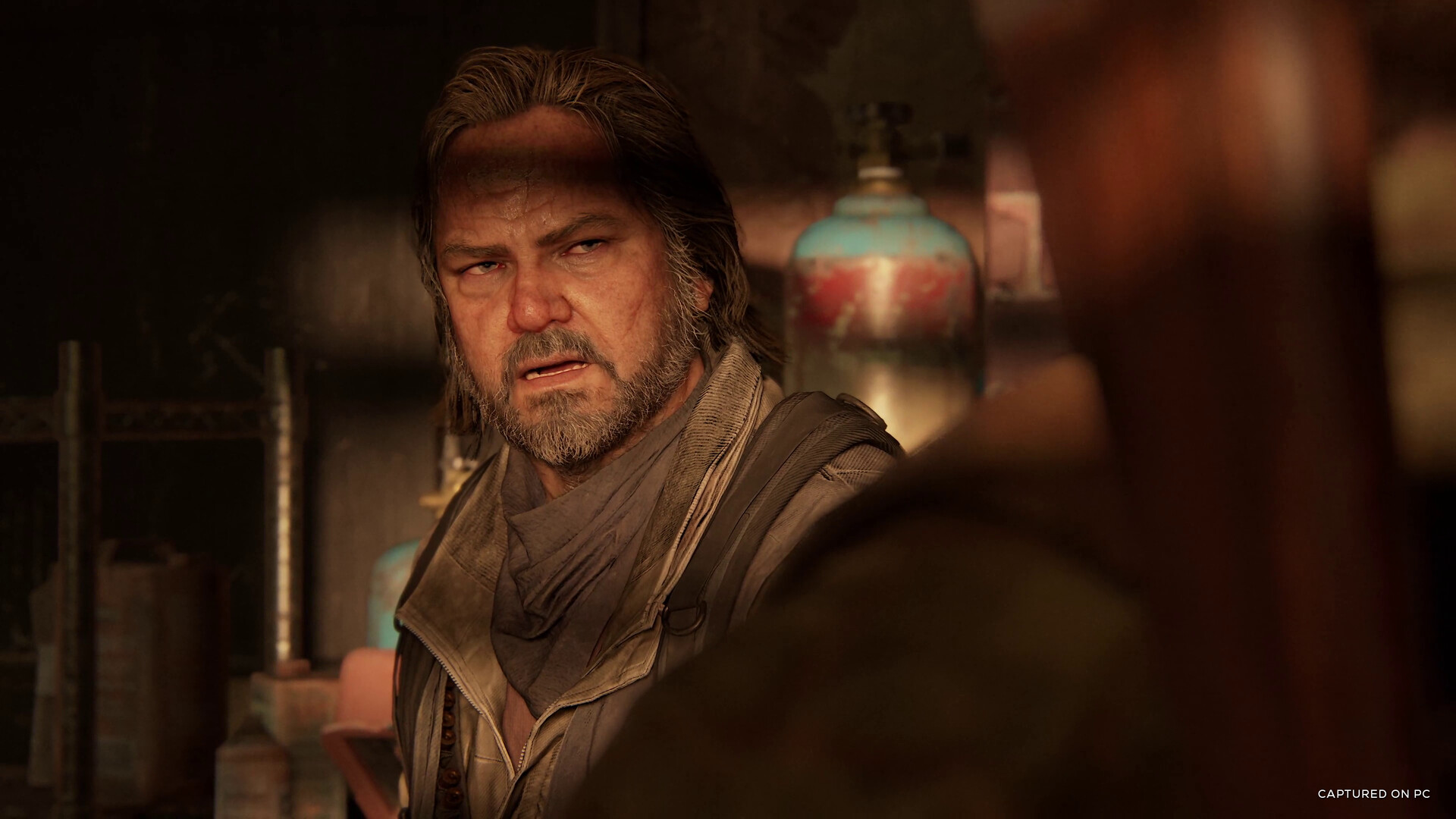
Naughty Dog took the original performance capture — already extraordinary for its time — and managed to elevate it to an entirely new level. The amount of detail present in the characters' faces is simply incredible. The micro-expressions, the glances, and the small emotional reactions add an extra layer of humanity that brings the player even closer to these characters.
Joel and Ellie have always been two of the best-constructed characters in video games. In this version, they feel more real than ever.
It's impressive how much emotion can be conveyed through a simple look or a subtle change in facial expression. There are scenes I already knew perfectly well that gained a new impact thanks to the technical work done in this remake.
The environments also benefited enormously from the visual improvements.
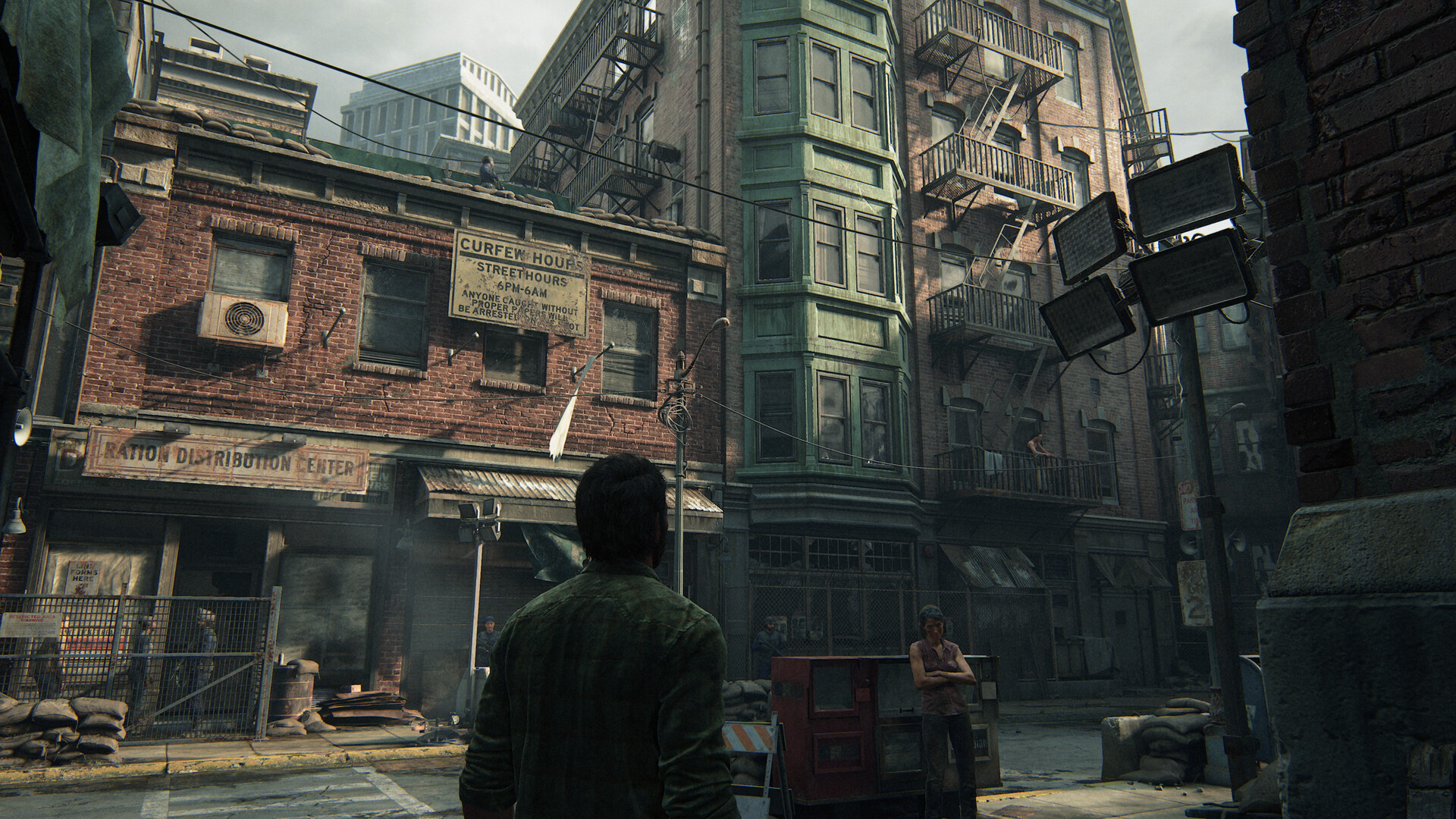
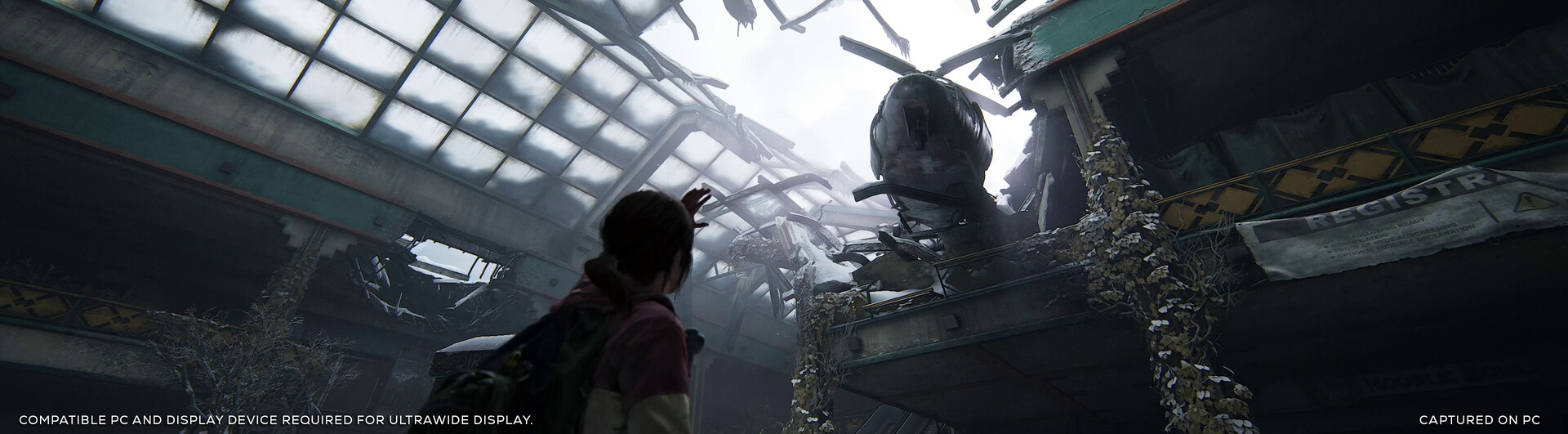
The post-apocalyptic world created by Naughty Dog remains one of the most fascinating in the industry. The abandoned cities, consumed by nature, hold a melancholic beauty that's hard to explain. There's something simultaneously tragic and fascinating about exploring these places where civilization slowly disappeared and the world reclaimed its space.
In this version, everything feels more alive.
Textures are more detailed, vegetation is denser, atmospheric effects are more convincing, and the lighting completely transforms certain areas. The way light cuts through destroyed buildings, or how rain changes the mood of certain sequences, helps constantly reinforce the immersion.
It's one of those games that frequently makes us stop just to take in the scenery.
But the improvements aren't limited to the visuals.
The gameplay also received several important adjustments that help bring the experience closer to the modern standards established by The Last of Us Part II.
The essence remains intact. This is still a game focused on survival, careful resource management, and encounters where every bullet counts. However, everything feels more refined.
Joel's movement is more fluid and responsive. The animations are more natural. The transition between exploration, combat, and stealth happens more organically. These are small adjustments that, individually, may seem subtle, but together make the experience significantly more enjoyable.
Combat still conveys that characteristic sense of brutality that has always defined the series.
Every encounter feels dangerous. Every enemy represents a real threat. There are no superheroes in this world — only survivors doing everything they can to stay alive.
That vulnerability remains one of the most effective aspects of the experience.
Gustavo Santaolalla's soundtrack remains as powerful as ever.
Few compositions manage to convey so much emotion with so little. The simple, melancholic chords perfectly accompany the narrative's tone, reinforcing the moments of tension, sadness, and hope that define the journey.
Even after all these years, it takes only a few seconds of music to be instantly transported back into this world.
But of course, the true heart of The Last of Us remains its narrative.
More than a story about an apocalypse, about the infected, or about the fall of civilization, this is a story about people.
About loss.
About trauma.
About love.
About what we're willing to do to protect the ones we love.
The relationship between Joel and Ellie remains one of the best ever written in video games. The way it evolves over the course of the adventure is so natural and convincing that it's impossible not to form an emotional bond with both characters.
Most impressive of all is that this bond doesn't depend on big speeches or overly dramatic scenes. It often grows from small conversations during exploration, from silent moments, or from simple, seemingly insignificant interactions.
It's precisely that authenticity that makes the narrative so powerful.
Few games manage to balance spectacle and intimacy this well.
Few manage to create characters this human.
And even fewer manage to maintain that emotional impact across so many revisits.
In the end, The Last of Us Part I doesn't exist because the original needed saving. The 2013 game is still extraordinary. This remake exists because Naughty Dog wanted to present its most important work in the best possible condition.
And it succeeded.
For anyone who has never played The Last of Us, this is undoubtedly the definitive way to discover one of the most important stories in the industry. For those who, like me, have already traveled this journey several times, it's an opportunity to return to a familiar world and rediscover details that time had slowly erased from memory.
More than a remake, it's a celebration of a work that continues to withstand the test of time.
Because some games grow old.
Others become classics.
And then there's The Last of Us, which keeps proving, year after year, why it deserves to be considered one of the best video games ever created.
out of 10
Pros
| Cons
|
Game The Last of Us Part I Released 2022 Available on PlayStation 5 · PC Reviewed on PlayStation 5 |  Cover: IGDB |
| PL | Pedro Lopes Writer · Portugal |
A games writer from Portugal running on a highly irresponsible amount of coffee — his blood type is officially "espresso". He has been a content creator at Lisbon Games Week, a jury member at Over & Out ’25 and an attendee of DevGAMM Lisbon 2025 (mostly for the free coffee). He has a Pac-Man tattoo on his finger, which contractually obliges him to chase ghosts forever.