
Detroit: Become Human is one of those games that manages to do something few can: make us forget we're holding a controller. Not because it has the best gameplay in the world or because it reinvents how we interact with video games, but because it draws us so deeply into its narrative that, at a certain point, we stop thinking about mechanics and simply start living the decisions in front of us.
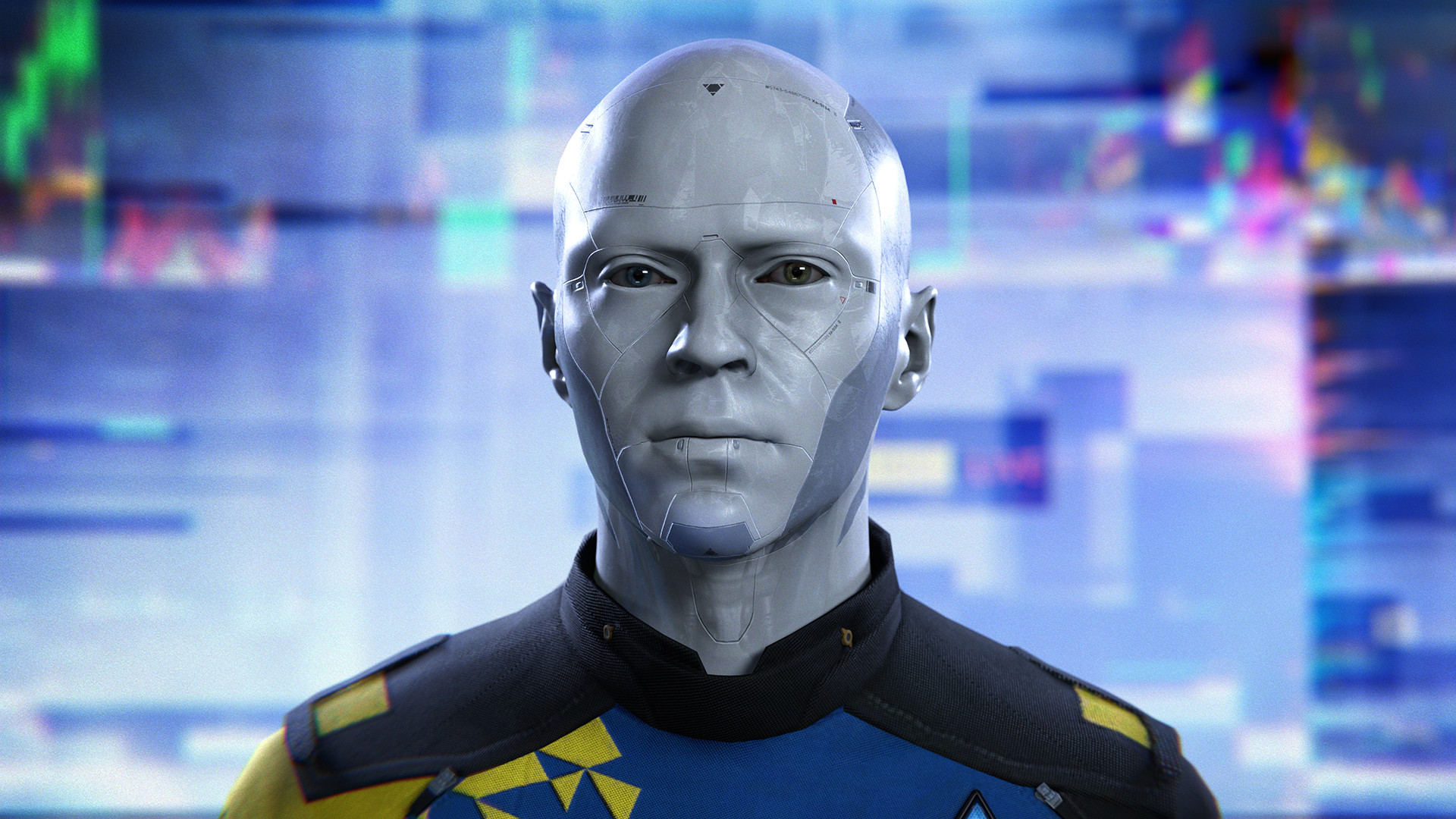
When I started playing, I already knew Quantic Dream was known for creating experiences heavily focused on narrative and player choice. Even so, I wasn't prepared for the level of investment Detroit manages to generate. Throughout the adventure I felt, several times, that genuine discomfort of having to make decisions without knowing exactly what the consequences would be. And that's precisely where the game finds its greatest strength.
The story takes us to a futuristic version of Detroit where androids are part of everyday society. They work, help families, perform security roles, and carry out tasks humans no longer want to do. At first glance, everything seems normal. But we quickly begin to realize there's something deeper behind that seemingly peaceful coexistence.
The game follows three distinct characters: Connor, Kara, and Markus. Each offers a different perspective on the world and on the conflicts that begin to emerge between humans and androids. And the most interesting part is that none of these stories feels less important than the others — they all contribute to painting a more complete portrait of that society.
Connor ended up being one of the characters who captivated me most. As an android built to assist police investigations, his story constantly places him before dilemmas that challenge his programming. The relationship he develops with Hank, the human detective who accompanies him, is probably one of the best in the game and provides some of the narrative's most compelling moments.
Kara, on the other hand, offers a much more emotional and human view of events. Her story revolves around protecting a child and contains some of the adventure's most tense and moving moments. It was also through her that I felt the impact of my decisions most strongly, because the consequences always felt deeply personal.
Markus represents the most political dimension of the narrative. His journey explores themes like freedom, equality, and revolution, placing the player before difficult choices that can radically alter the course of events. Depending on how we choose to act, his story can take on completely different tones.
What impressed me most was the way all these narratives intersect and influence one another. This isn't an illusion of choice. Many decisions have real consequences, and some only reveal their impact many hours later. That creates a constant sense of responsibility for what we do.
There were moments when I sat thinking for several minutes before making a decision — not because the game was presenting mechanically complex options, but because it made me genuinely question what I believed the right choice to be. Few games can provoke that kind of emotional involvement.
The narrative tackles some fascinating themes: identity, consciousness, free will, and what it truly means to be human. Despite using androids as a starting point, many of the questions it raises are clearly directed at our own society. The game doesn't try to impose answers, but constantly invites reflection.
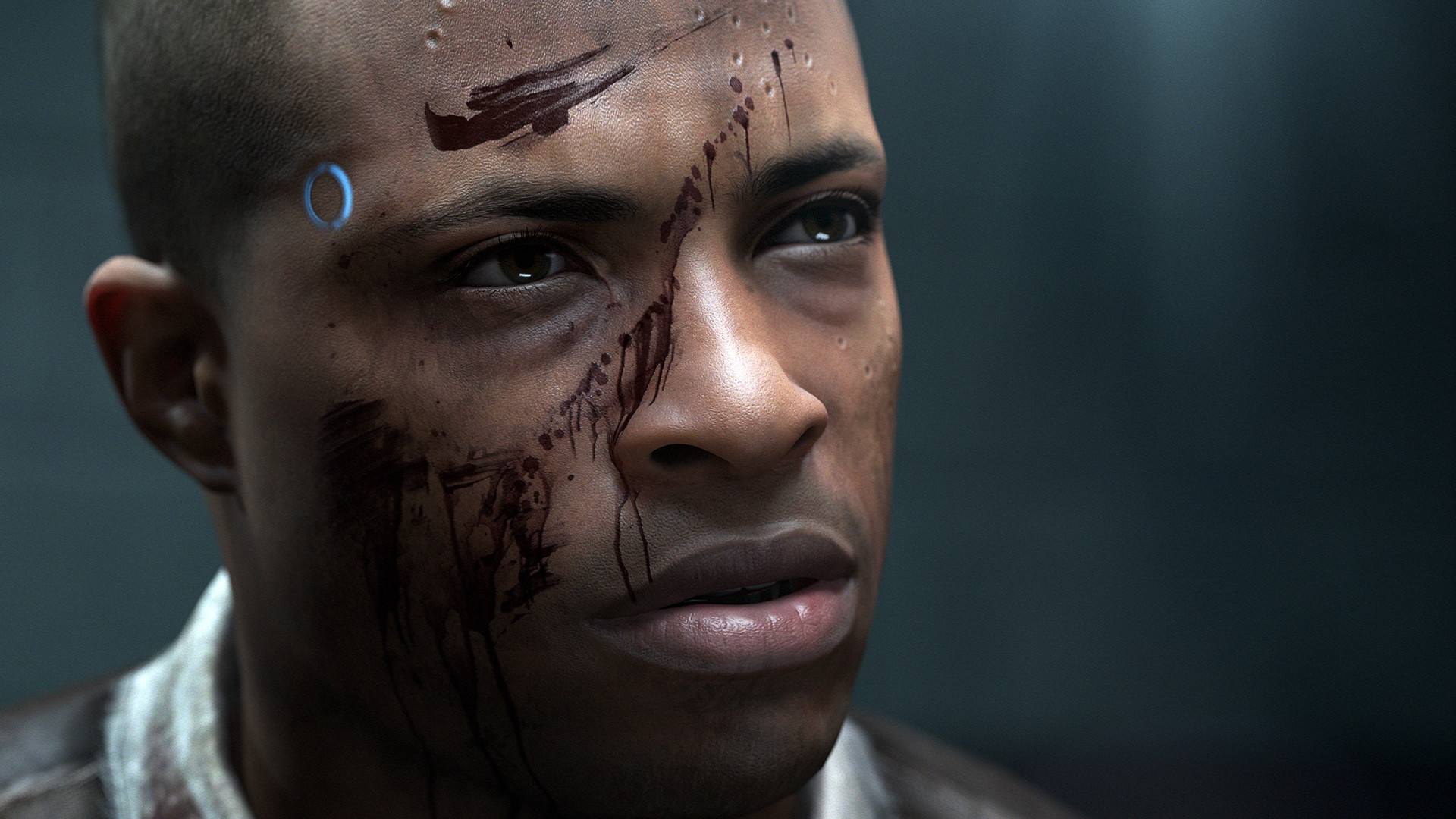
Visually, Detroit still impresses. Even having originally launched in 2018, it maintains a very respectable graphical standard. The character models remain extremely detailed, and the facial expressions play a fundamental role in how the story is told.
Much of the emotional impact of the scenes is born precisely from those small expressions — the looks, the hesitations, the characters' reactions. There are moments when a simple silence says more than several minutes of dialogue.
The settings also help bring the world to life. From modest apartments to futuristic areas packed with technology, everything contributes to creating a believable version of the near future. The art direction manages to balance futuristic elements with familiar environments, making that universe easy to accept and understand.
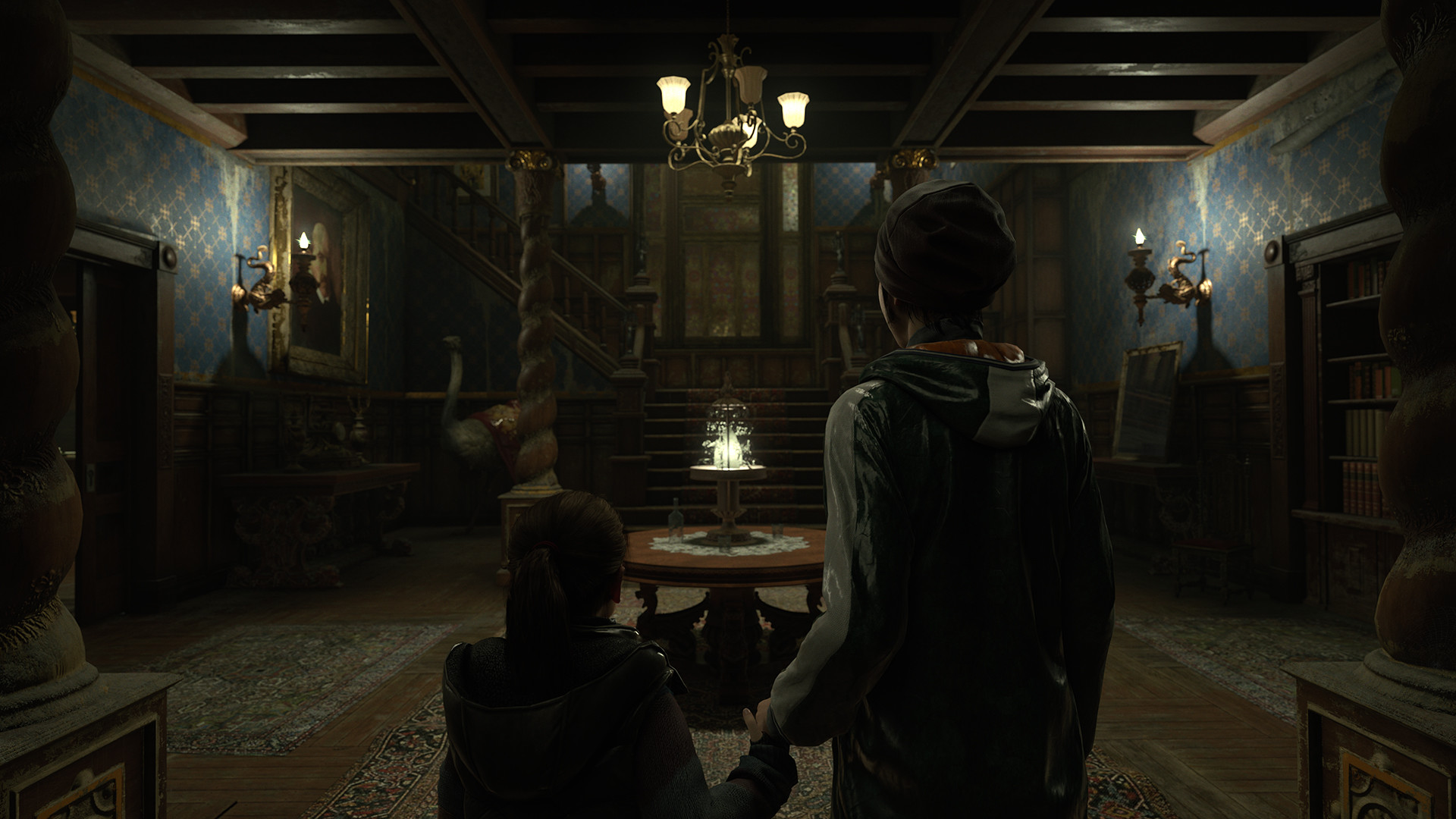
I played on PS5 and, overall, the experience was quite positive. Performance surpasses the original version, and fluidity clearly benefits from the new generation. That said, I did encounter occasional frame drops, especially in busier scenes or during more demanding sequences. They weren't serious issues, but they were enough to be noticed at certain moments.
The soundtrack also deserves recognition. Each protagonist has musical themes of their own that help reinforce their identity and the tone of their respective stories. The music adapts beautifully to each scene's emotions and manages to significantly amplify the impact of certain key moments.
There are sequences that would hardly carry the same emotional weight without the right musical accompaniment. It's one of those elements that often goes unnoticed while we play, but whose absence would be felt immediately.
The gameplay is relatively simple, but that ends up working in the experience's favor. Detroit never pretends to be a traditional action game. The focus is on choices, observation, and narrative. The controls are intuitive and rarely interfere with the story's rhythm.
The investigation sequences, especially with Connor, help introduce some variety and let the player analyze scenes, reconstruct events, and uncover clues in an interesting way. They aren't particularly complex, but they complement the experience nicely.
Another element I really enjoyed was the flowcharts shown at the end of each chapter. Seeing all the available possibilities and realizing how many different paths could have been taken significantly increases the urge to revisit the story. Few games encourage second or third playthroughs as much as Detroit does.
Of course, not everything is perfect. There are moments when certain social messages are presented a little too directly, without much subtlety. Some situations can also feel simplified compared to the complexity of the themes they try to address. Still, these aspects never come close to undermining the overall quality of the experience.
In the end, Detroit: Become Human is much more than a simple narrative adventure. It's a game that forces us to reflect on our choices, on the way we see others, and on what we consider humanity to be.
The combination of a strong narrative, memorable characters, excellent production values, and a choice system that truly matters turns it into an experience that's hard to forget. Even years after release, it remains one of the best demonstrations of video games' narrative potential.
More than playing Detroit, I felt like I participated in building its story. And when a game makes us feel responsible for the fate of its characters, it's because it did something very well.
out of 10
Pros
| Cons
|
Game Detroit: Become Human Released 2018 Available on PlayStation 4 · PC Reviewed on PlayStation 4 |  Cover: IGDB |
| PL | Pedro Lopes Writer · Portugal |
A games writer from Portugal running on a highly irresponsible amount of coffee — his blood type is officially "espresso". He has been a content creator at Lisbon Games Week, a jury member at Over & Out ’25 and an attendee of DevGAMM Lisbon 2025 (mostly for the free coffee). He has a Pac-Man tattoo on his finger, which contractually obliges him to chase ghosts forever.