
Cyberpunk 2077 is one of those games whose story outside the game itself ended up becoming almost as famous as the narrative it presents. The troubled launch inevitably shaped many players' perception, but returning to Night City today means finding an experience very different from the one that existed in the first months after its release.
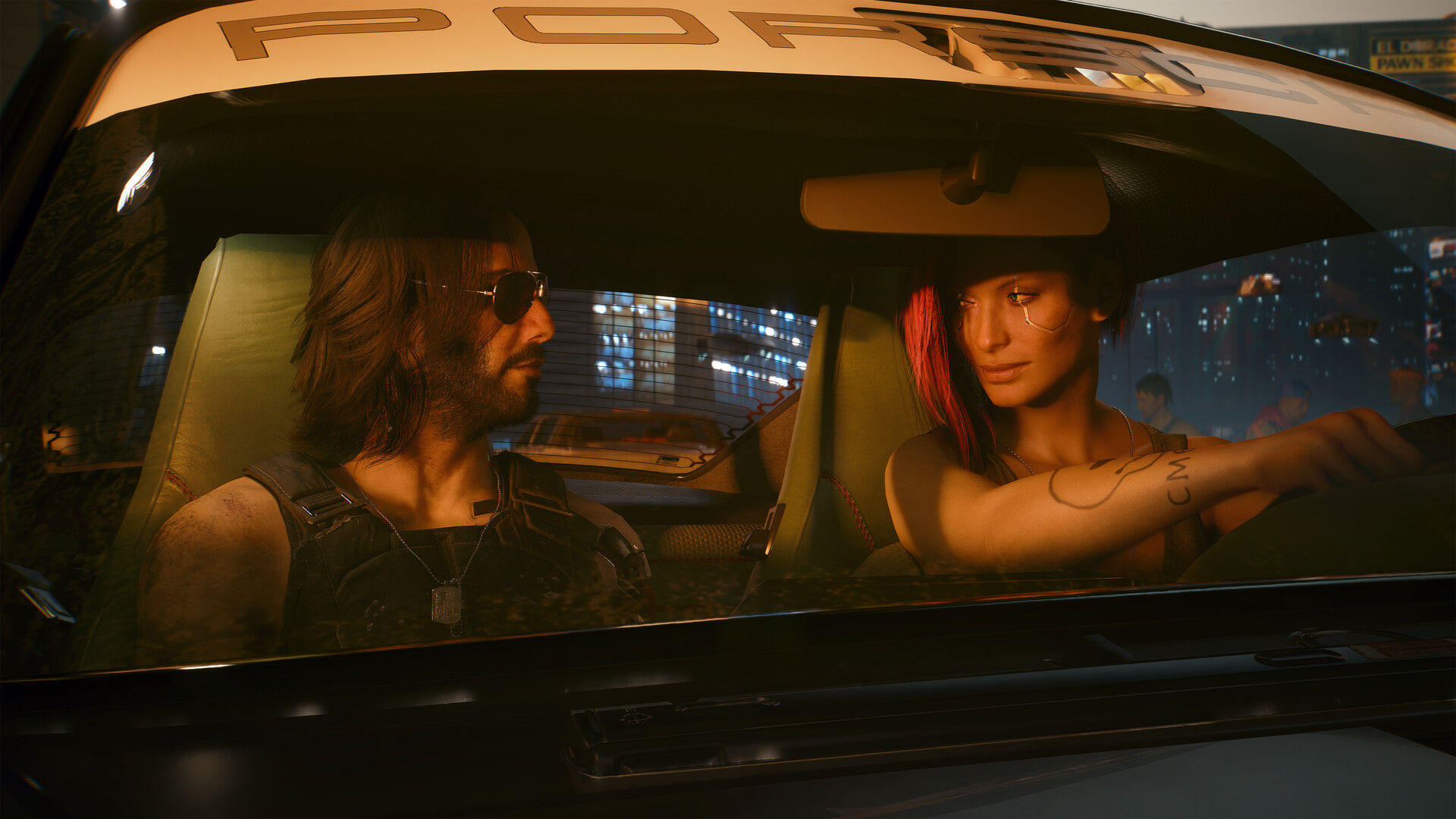
More than a simple action RPG, Cyberpunk 2077 is a journey into one of the most impressive and detailed worlds ever created in video games.
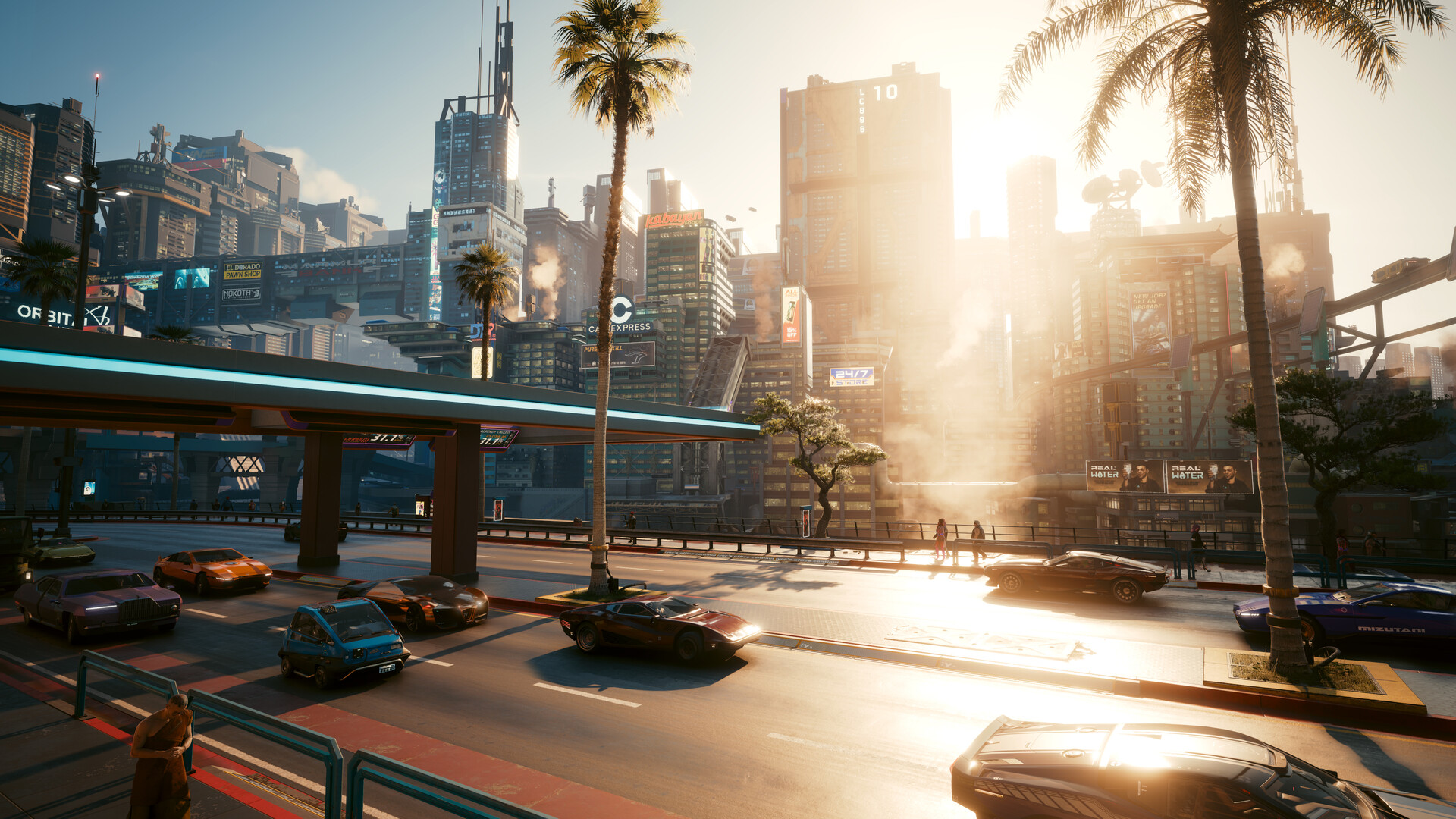
Night City isn't merely the backdrop where the adventure happens. It's a character in its own right. From the enormous corporate skyscrapers to the seediest neon-lit alleys, everything conveys the feeling of a place that's alive, chaotic, and constantly in motion. Few games manage to create a city with this much personality.
Most impressive is how each district has a distinct identity. The more luxurious areas contrast violently with neighborhoods dominated by crime and poverty, creating a constant sense of social inequality that fits the cyberpunk universe perfectly. Wandering the streets aimlessly ends up being just as interesting as completing missions, because there's always something new to discover.
The atmosphere is simply extraordinary.
There's a permanent feeling of being inside a believable, if deeply dystopian, future. The giant holographic advertisements, the cybernetic implants, the omnipresent corporations, and the mixture of cultures help create a world that feels simultaneously fascinating and frightening.
The narrative is another of the experience's great strengths.
Without going into spoilers, the main story manages to balance action, drama, and existential questions very effectively. V's journey is marked by difficult decisions, memorable characters, and moments that carry genuine impact. Although the main campaign isn't particularly long by the genre's standards, it's engaging enough to keep us constantly invested in how events unfold.
However, it's outside the main narrative that Cyberpunk 2077 often reveals its best side.
The side stories are among the best written I've found in a modern RPG. Many of them go far beyond typical optional content, presenting complex characters, interesting moral dilemmas, and small narrative arcs capable of rivaling the quality of the main campaign. Some of my most memorable moments in the game came precisely from these side missions.
The cast of characters is excellent.
Throughout the adventure we cross paths with figures who have personality, motivations, and conflicts of their own. The game does a remarkable job of building relationships that feel natural and important to the narrative's development. These are characters who stay in your memory long after the final credits.
In terms of gameplay, Cyberpunk 2077 offers enormous freedom in how we approach challenges.
We can go for direct combat, specialize in firearms, take a stealth approach, focus on advanced hacking, or mix several styles together. The progression system allows for a highly customized character, adapting the experience to each person's playstyle.
Combat evolves significantly over the course of the adventure. As we unlock new abilities and cybernetic implants, we start feeling increasingly powerful, capable of tackling complex situations in extremely creative ways.
Visually, it's still one of the most impressive games around.
Even several years after launch, Night City maintains a stunning visual quality. The lighting, the reflections, the environmental detail, and the sheer density of the city create a visual experience that's hard to match. There are moments when simply stopping to gaze at the neon-lit skyline is as rewarding as finishing a mission.
The soundtrack and sound design elevate that immersion even further.
The radio stations, the electronic music, the urban sounds, and the compositions that accompany the most important moments all help create a very distinct identity for the game. Everything contributes to reinforcing the feeling that we're truly inside that universe.
Naturally, it's impossible to talk about Cyberpunk 2077 without mentioning its complicated past.
The technical issues that marked its launch were real and seriously affected many players' experiences. Fortunately, most of those problems were corrected over the years through updates and significant improvements. The current version of the game presents a far superior level of polish and finally lets us appreciate the full potential of CD Projekt Red's original vision.
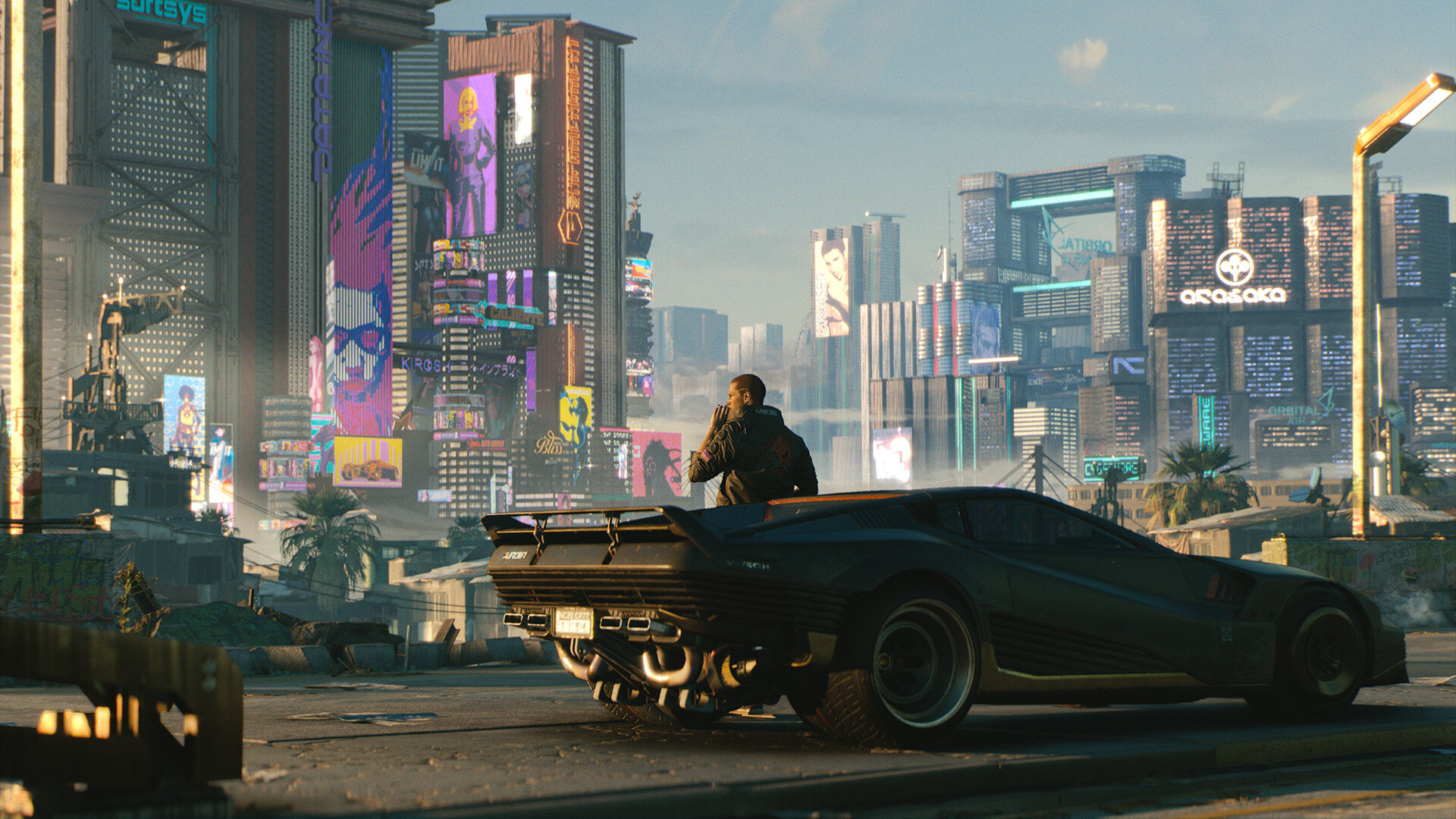
In the end, Cyberpunk 2077 is an experience that manages to do something increasingly rare: create a world where you want to stay even after finishing the story.
Night City is fascinating, the characters are memorable, and the sheer number of stories scattered across the world makes every outing rewarding. Despite the problems that marked its beginning, the game managed to transform into one of the most interesting RPG experiences of the last decade.
It's a title I want to return to in the future — not just to revisit the story, but to live in that world again. Because few games manage to create such a strong sense of presence and immersion as Cyberpunk 2077.
And when a game makes us feel like we truly inhabited its universe, that's a sign it did something very special.
out of 10
Pros
| Cons
|
Game Cyberpunk 2077 Released 2020 Available on PC · PlayStation 4 · PlayStation 5 · Xbox One · Xbox Series X|S · macOS Reviewed on Xbox Series X|S |  Cover: IGDB |
| PL | Pedro Lopes Writer · Portugal |
A games writer from Portugal running on a highly irresponsible amount of coffee — his blood type is officially "espresso". He has been a content creator at Lisbon Games Week, a jury member at Over & Out ’25 and an attendee of DevGAMM Lisbon 2025 (mostly for the free coffee). He has a Pac-Man tattoo on his finger, which contractually obliges him to chase ghosts forever.