
Resident Evil 7: Biohazard was my first contact with the franchise and, looking back, I could hardly have asked for a more intense starting point. I went in with no prior knowledge of the story, no nostalgia for the classic titles, and no great expectations about what awaited me. All I knew was that I was about to play one of the series' most acclaimed chapters. What I didn't know was just how unsettling and absorbing that experience would be.
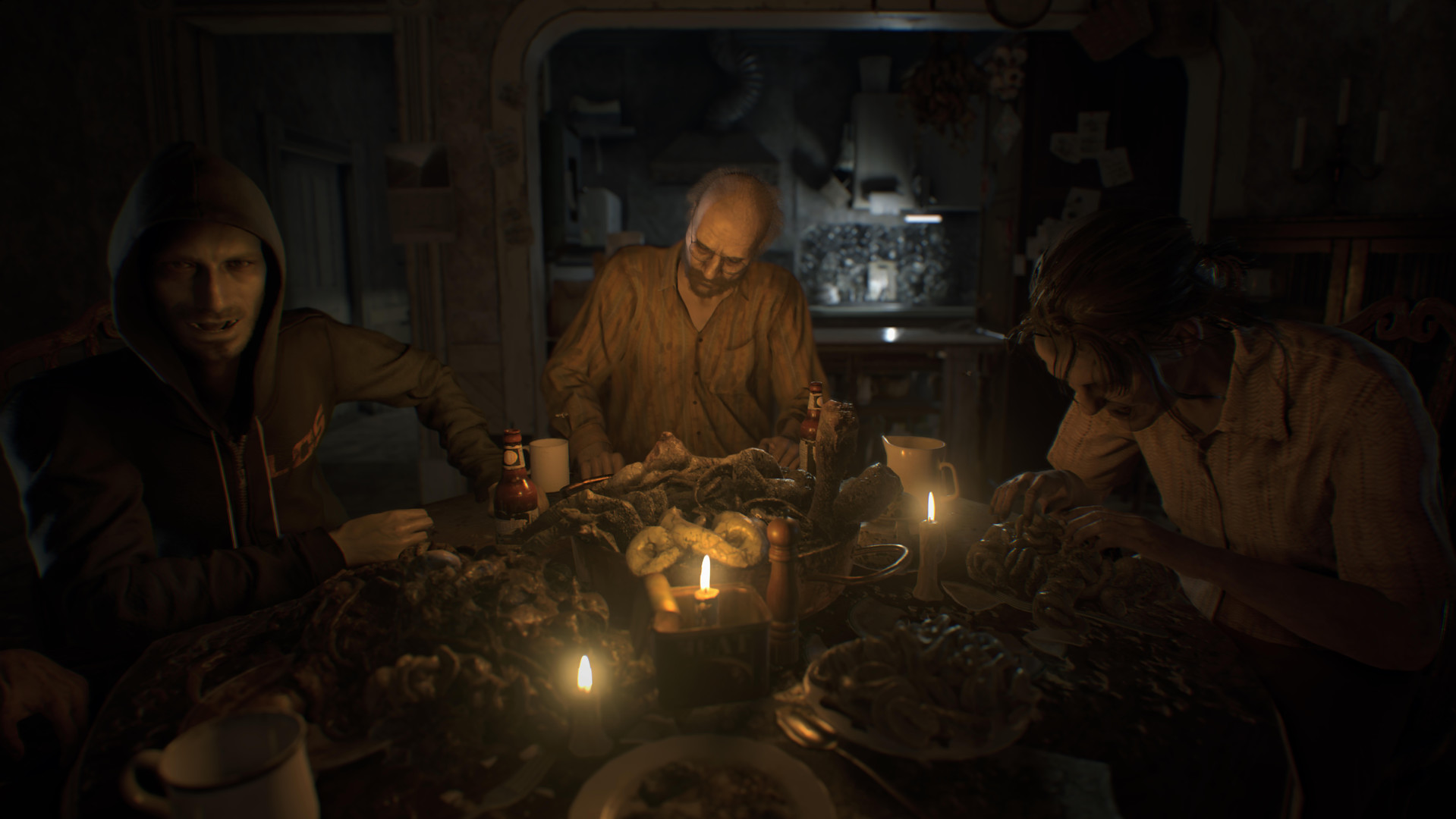
From the very first minutes, the game makes a point of putting you in a position of vulnerability. We play as Ethan Winters, an ordinary man searching for his missing wife after receiving an unexpected message. What begins as a simple search quickly turns into a nightmare. Arriving at the Baker estate marks the start of an experience where the sense of danger is present at almost every moment.
The Baker family is, without question, one of the game's greatest strengths. Each member has a personality of their own and contributes to the disturbing atmosphere that dominates the entire adventure. Jack Baker ended up being the character who stuck with me the most. There's something deeply unnerving about the way he stalks you through the house. He never feels entirely predictable, and he constantly conveys the sense that he could appear around any corner. For most of the game I felt more concerned with surviving than with defeating whatever was chasing me — and that made everything far more tense.
The shift to a first-person perspective was a decision that paid off extremely well. Everything feels closer, more personal, more threatening. Every dark corridor takes on a different dimension when it's you slowly moving forward, not knowing what's waiting on the other side of the door. Many times I caught myself hesitating before opening a new room — not because the game forced me to, but because the accumulated tension was simply part of the experience.
Resource management also plays an important role. Ammunition is limited, healing items never seem to be enough, and every confrontation forces you to think twice before acting. Facing the enemy head-on isn't always the best solution. More often than not, avoiding combat and looking for an alternative is the smarter call. That balance between survival and resource management constantly reminds you that you're not a hero prepared for anything — you're someone trying to escape an impossible situation.
Another aspect that impressed me was the design of the Baker property. Although it isn't a gigantic space, the way everything connects creates a constant sense of discovery. As you unlock new areas and find shortcuts, you start to know that place almost as well as its inhabitants do. There's a remarkable attention to detail in every room: the decaying decor, the accumulated filth, the scattered objects, and the small visual elements all help build a heavy atmosphere without constantly resorting to cheap scares.
Sound deserves a special mention, because so much of the horror is born from it. There are moments when you hear footsteps in the distance, noises coming from another room, or simply a strange silence that instantly puts you on edge. More often than not, the game scares you more through what it suggests than through what it actually shows. That ability to work the player's imagination is one of its greatest qualities.
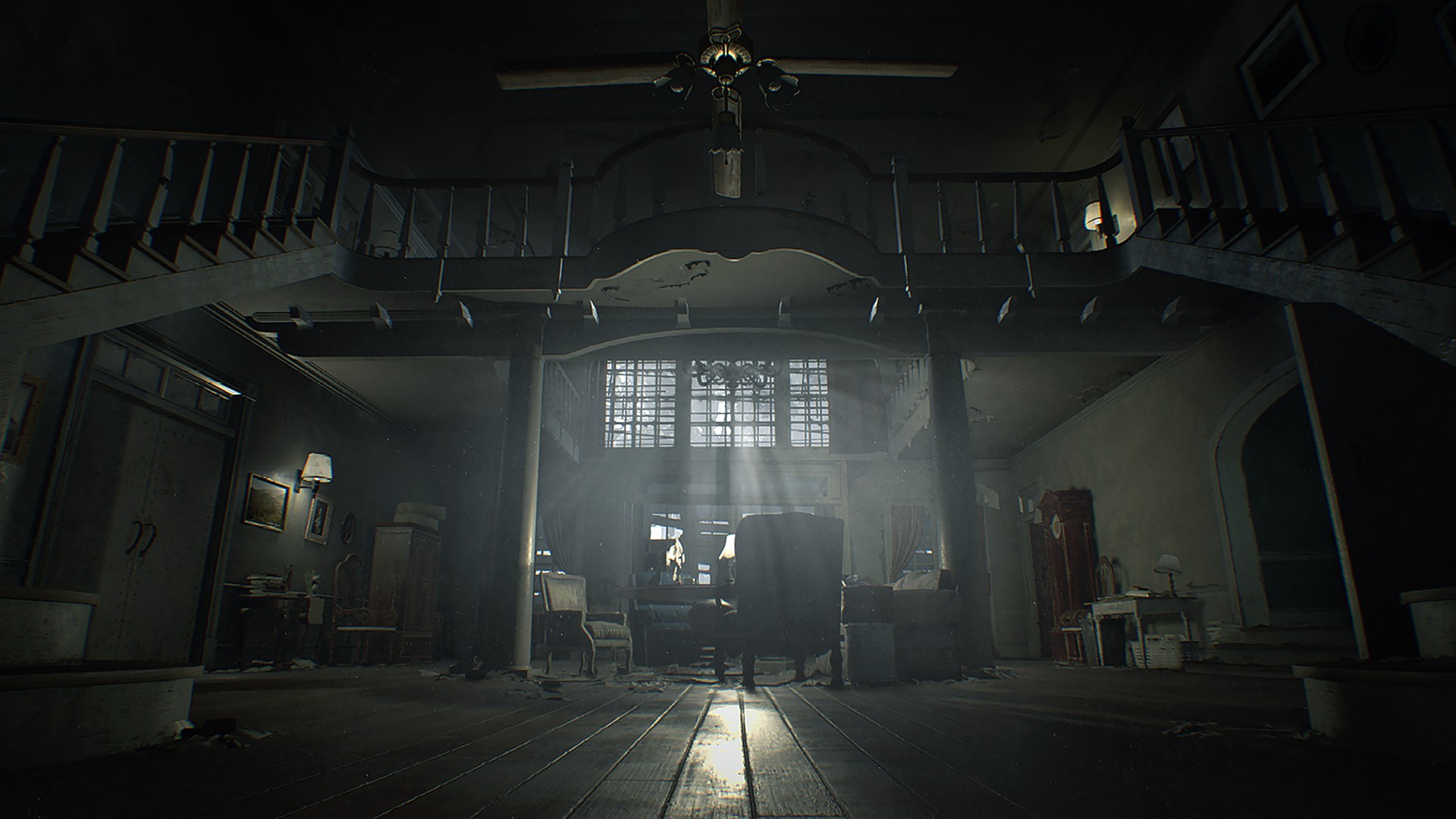
Visually, Resident Evil 7 also continues to impress. The realism of the environments and the way lighting is used help create an oppressive, believable setting. This isn't a game that tries to wow you with visual beauty alone — everything was built to serve the atmosphere and reinforce the sense of discomfort.
The narrative manages to hold your interest through practically the entire campaign. There are interesting revelations, standout moments, and a good sense of progression. That said, I felt the final stretch loses some of the identity that makes the first hours so special. The focus shifts more toward action and, while it remains fun, it dials back the psychological horror that defines the opening of the adventure. It doesn't compromise the experience, but the change in tone is noticeable.
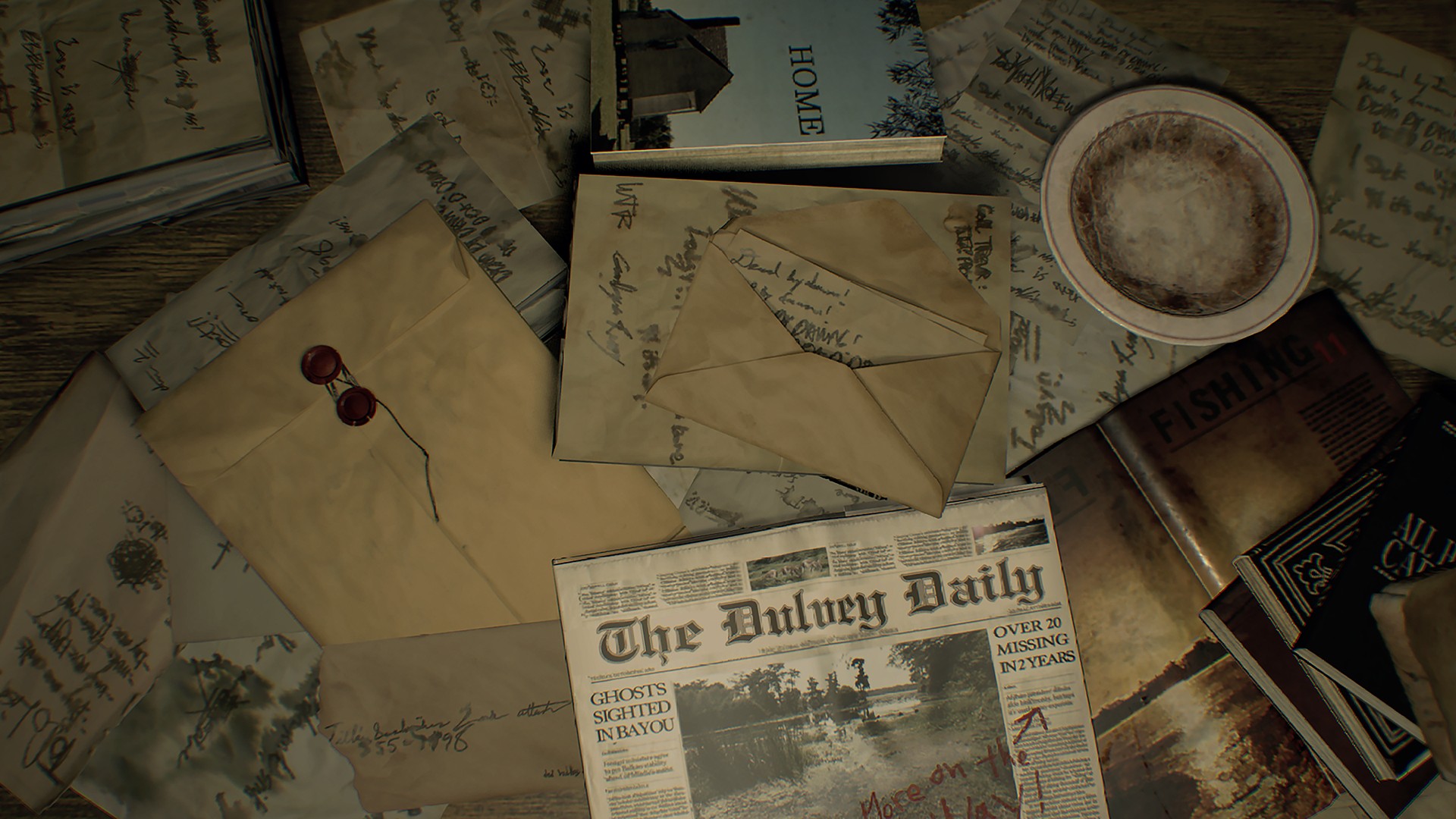
In the end, Resident Evil 7 was far more than a simple introduction to the series. It was an experience that showed me why Resident Evil remains a benchmark in the genre. The game balances horror, exploration, resource management, and narrative in a way that rarely feels forced. More than the scares, it was the constant sense of tension and vulnerability that stayed with me after the final credits.
If this was my gateway into the franchise, I couldn't have asked for a more memorable debut. It was uncomfortable, frightening, at times frustrating — but above all, incredibly absorbing. And when a horror game is still living in your head long after you've turned it off, that's because it did something very, very right.
out of 10
Pros
| Cons
|
Game Resident Evil 7: Biohazard Released 2017 Available on PC · PlayStation 4 · PlayStation 5 · Xbox One · Xbox Series X|S Reviewed on PlayStation 5 |  Cover: IGDB |
| PL | Pedro Lopes Writer · Portugal |
A games writer from Portugal running on a highly irresponsible amount of coffee — his blood type is officially "espresso". He has been a content creator at Lisbon Games Week, a jury member at Over & Out ’25 and an attendee of DevGAMM Lisbon 2025 (mostly for the free coffee). He has a Pac-Man tattoo on his finger, which contractually obliges him to chase ghosts forever.