
There are games that hold our attention for a few hours and then fade from memory. And then there are games like Hades, which manage to turn a seemingly simple mechanic into an experience that's nearly impossible to put down. I went in without great expectations for the roguelike genre, but a few escape attempts from the underworld were all it took to understand why this game received so much recognition.
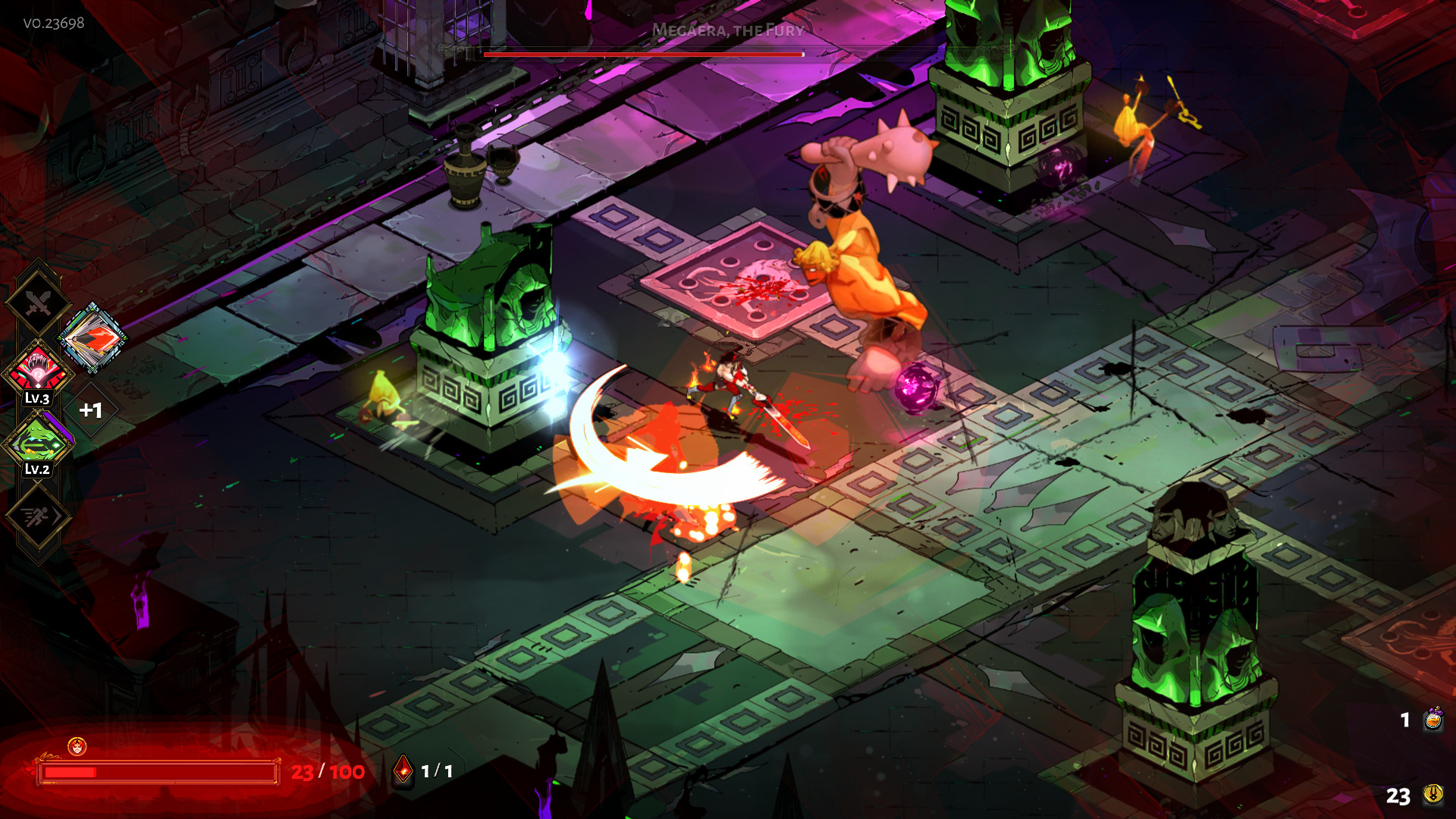
The concept is simple: we play as Zagreus, son of Hades, who is determined to escape the underworld and discover the truth about his origins. The problem is that no one seems particularly interested in letting him leave. Every attempt inevitably ends in defeat... at least for quite some time. But that's precisely where Hades sets itself apart from most games in the genre.
Normally, dying in a roguelike means starting practically from scratch. In Hades, every defeat feels like part of the plan. Each time we return to the House of Hades there's a new conversation to hear, a new interaction to discover, one more small detail that helps develop the story. The game turns failure into a narrative tool, and that makes all the difference.
That was one of the things that surprised me most. Instead of getting frustrated when I died, I often felt curious to go back and see what new conversations awaited me. The relationships between characters evolve naturally, and the world seems to react constantly to our escape attempts. It's such a well-built system that we rarely feel like we're simply repeating content.
Zagreus is also an extremely charismatic protagonist. His personality makes every dialogue interesting and helps create a fun dynamic with the other figures of Greek mythology. Hades, Nyx, Megaera, Thanatos, Achilles, and so many other characters get their chance to shine thanks to remarkably consistent writing.
The narrative achieves something rare: it makes us want to keep playing as much for the story as for the gameplay. There's often a difficult balance between these two elements, but Hades makes them feed off each other.
Visually, it's one of the most distinctive games I've played in recent years. Supergiant Games' artistic style is instantly recognizable and gives the game an identity all its own. The vibrant colors, the effects during combat, and the character designs create a world brimming with personality.
Each region of the underworld has its own ambiance, which does a lot to maintain the feeling of progression. From the shadowy corridors of Tartarus to the more luxurious landscapes of Elysium, there's always something visually interesting to discover. Even after dozens of hours, I never felt like I was walking through generic, identity-less scenery.
The work done on the characters also deserves praise. The gods of Olympus, the inhabitants of the underworld, and even the enemies have memorable designs. There's a really interesting balance between classical mythological inspiration and a more modern interpretation, and it works beautifully.
The soundtrack is another of the game's great strengths. The music perfectly matches the frenetic pace of the action and manages to raise the intensity of the toughest fights even further. There are moments when the combination of music, visual effects, and gameplay creates an energy that's hard to find anywhere else.
At the same time, the quieter moments inside the House of Hades are accompanied by more melancholic themes that create contrast. That alternation between action and calm works extremely well and lends greater impact to the story's important beats.
The voice performances are also on a very high level. The dialogue is natural, full of personality, and conveys emotion without exaggeration. After a few hours, we come to know these characters almost like old acquaintances — and that contributes enormously to the story's emotional pull.
But it's impossible to talk about Hades without highlighting what truly makes it special: the gameplay.
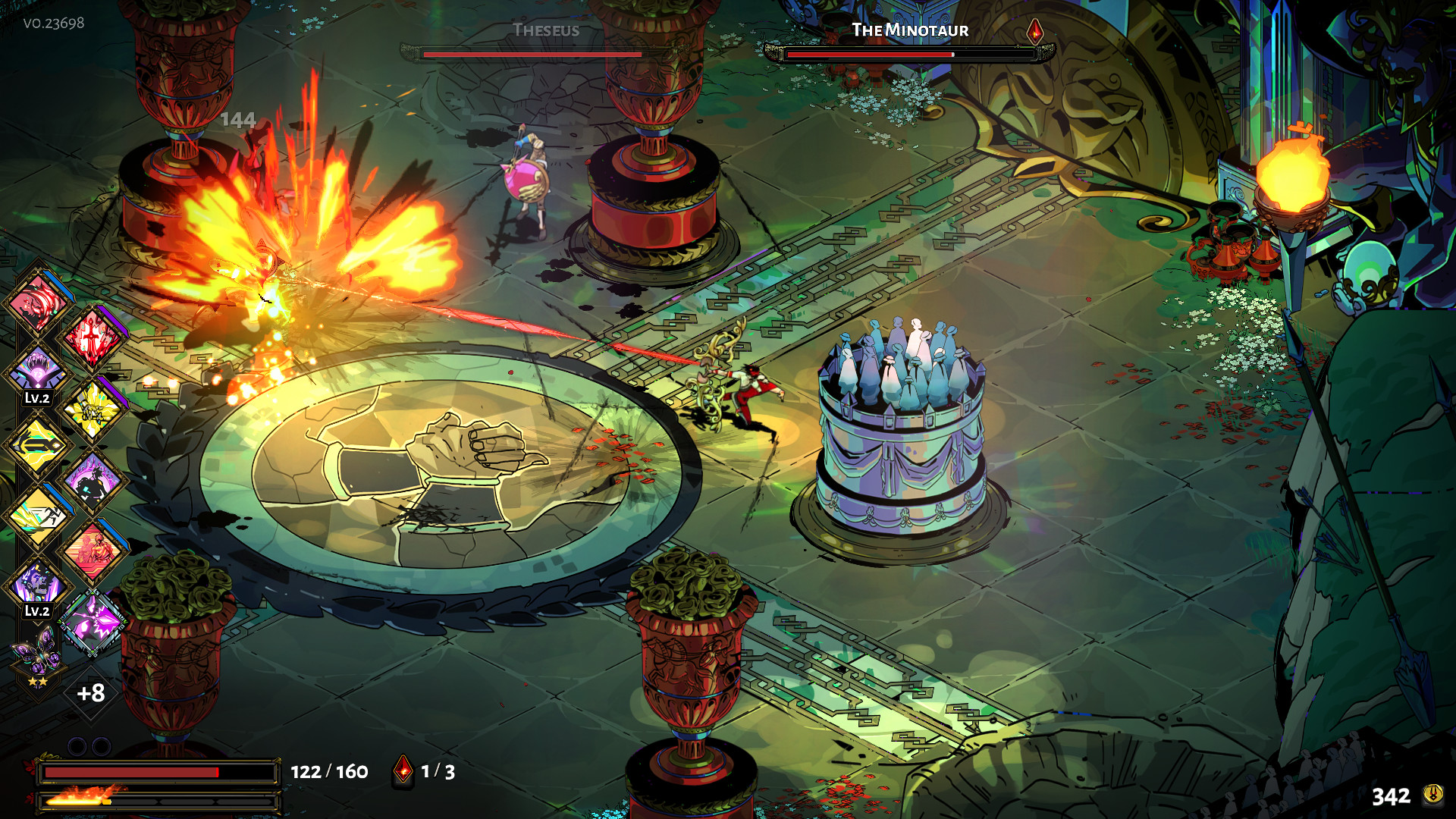
The combat is simply fantastic. Everything responds quickly, precisely, and satisfyingly. Each available weapon offers a completely different experience, forcing us to adapt strategies and playstyles. A run with the sword can feel entirely different from one with the bow, the shield, or the fists.
The boons granted by the gods are another element that makes every run unique. We never know exactly which combinations we'll find, and that creates a constant sense of experimentation. Some builds turn into veritable machines of destruction, while others demand a more careful, strategic approach.
The most impressive part is that the game manages to offer depth without becoming complicated. There are many mechanics to master, but everything is introduced intuitively. Even while we're still learning, we always feel like we're improving and understanding the system better.
As the hours go by, we unlock permanent upgrades, strengthen Zagreus, and gain access to new possibilities. That progression system ensures every session has value. Even a less successful attempt contributes to the adventure's overall progress.
Another important quality is the difficulty balance. Hades manages to be challenging without ever feeling unfair. When we fail, we usually understand the mistake was ours, not the result of a poorly implemented mechanic. That creates a constant urge to jump back in and do better.
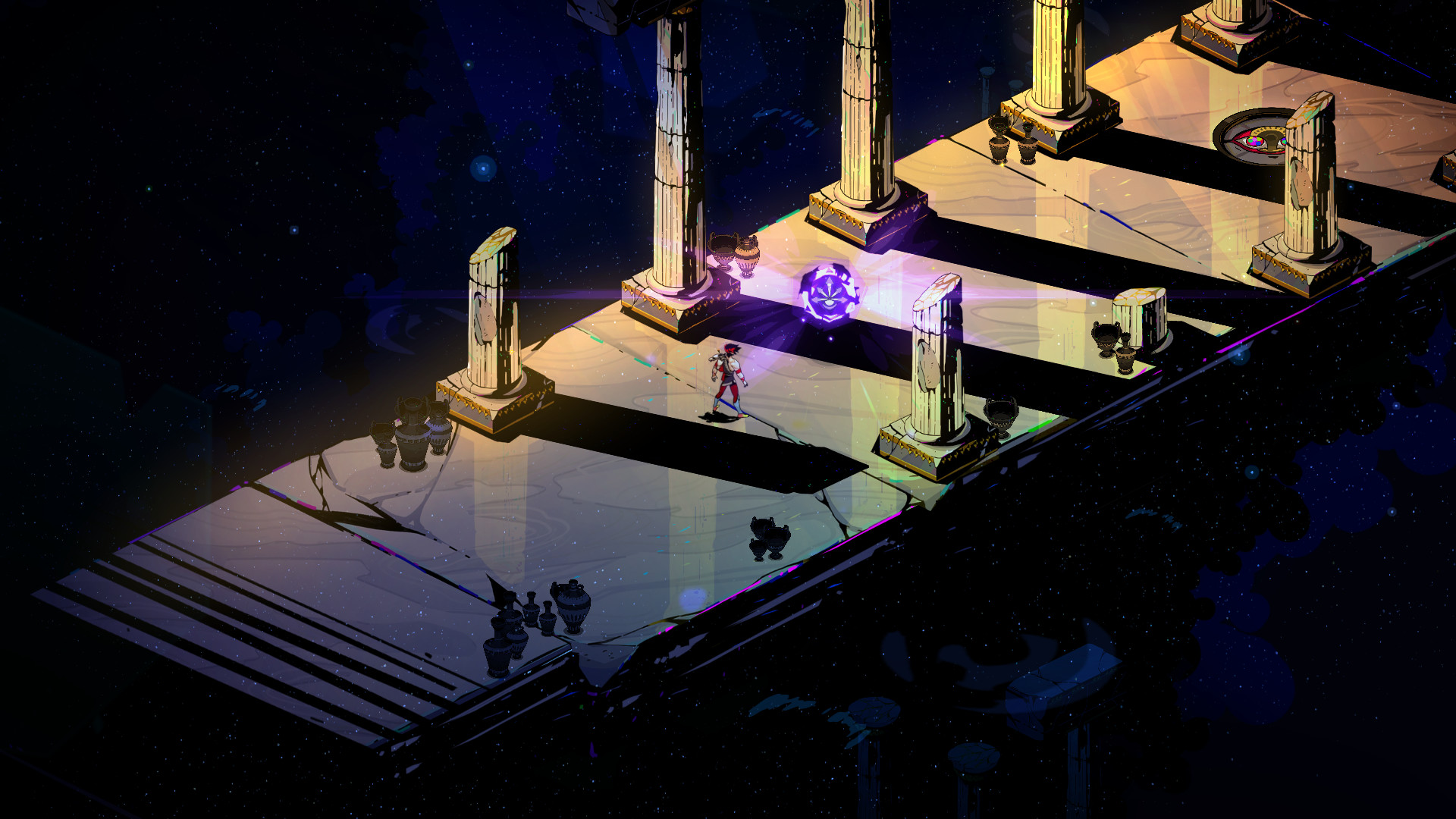
After many hours, the sense of repetition that usually plagues some roguelikes simply never arrived. Between new power combinations, different weapons, unheard dialogue, and additional goals, there's always a reason for one more run.
In the end, Hades is one of those games that's hard to criticize, because everything seems to work in concert. The narrative, the gameplay, the music, the art style, and the progression complement each other almost perfectly. Rarely do we find a title that can execute so many different ideas at this level of quality.
More than an excellent roguelike, Hades is an excellent video game, regardless of genre. It's fun, challenging, intelligent, and incredibly addictive — a game that respects the player's time, rewards persistence, and turns every defeat into an opportunity to move forward.
And perhaps that's its greatest achievement. In a game about trying to escape hell, the truth is I never really wanted to leave.
out of 10
Pros
| Cons
|
Game Hades Released 2020 Available on PC · macOS · PlayStation 4 · PlayStation 5 · Xbox One · Xbox Series X|S · Nintendo Switch Reviewed on PC |  Cover: IGDB |
| PL | Pedro Lopes Writer · Portugal |
A games writer from Portugal running on a highly irresponsible amount of coffee — his blood type is officially "espresso". He has been a content creator at Lisbon Games Week, a jury member at Over & Out ’25 and an attendee of DevGAMM Lisbon 2025 (mostly for the free coffee). He has a Pac-Man tattoo on his finger, which contractually obliges him to chase ghosts forever.