
Far Cry 4 is one of those cases where a sequel has an almost impossible task ahead of it. It arrived after Far Cry 3, a game that for many remains the franchise's high point and helped redefine what was expected from a Ubisoft open world at the time. Comparisons were inevitable. And while I don't think Far Cry 4 manages to surpass the impact of its predecessor, the truth is it does something equally important: it takes an already solid formula and makes it more refined.
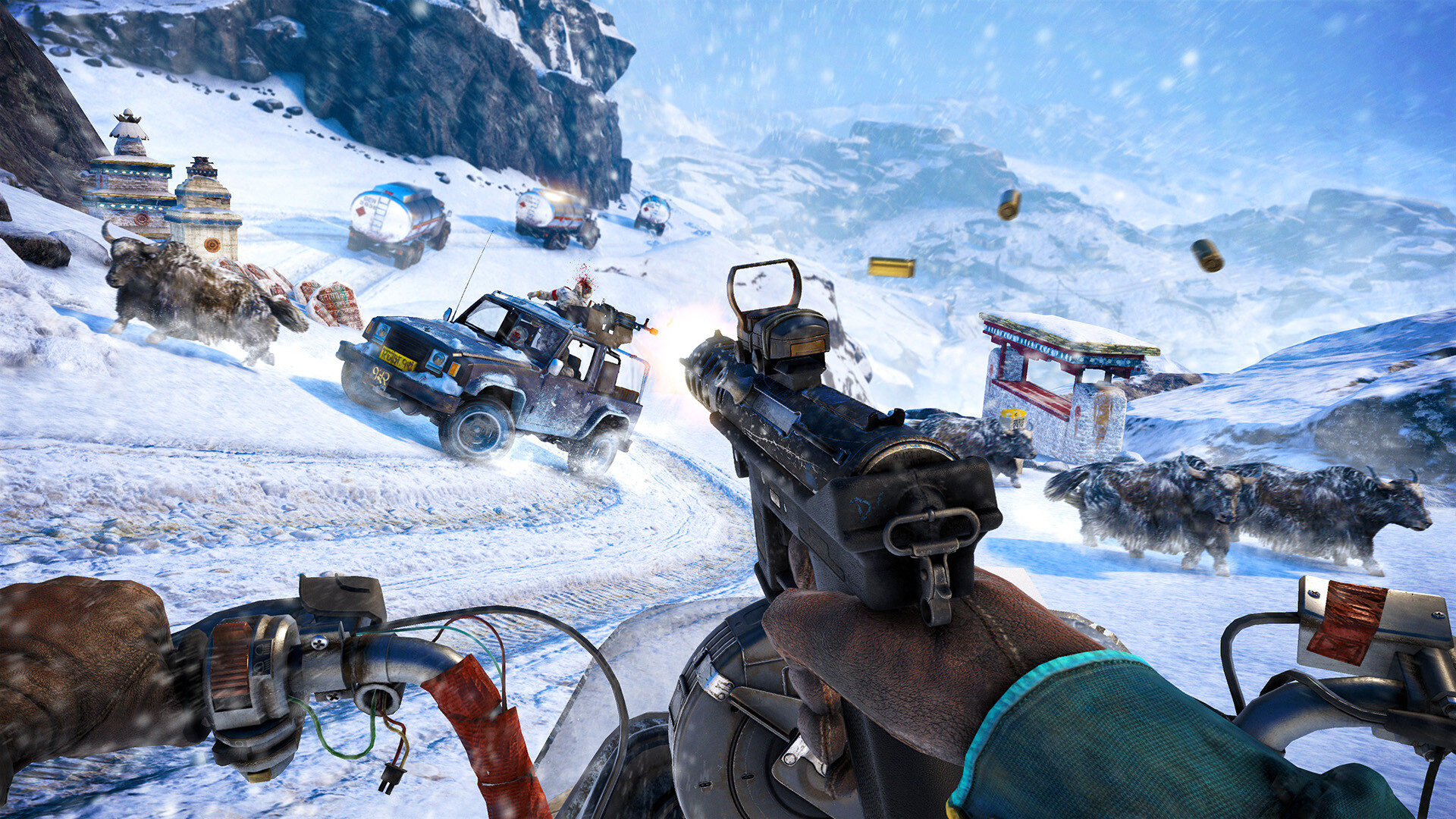
From the very first moments, the game wins you over with its setting. Kyrat is easily one of the most interesting backdrops the series has ever presented. Inspired by the landscapes of Nepal and Tibet, this small fictional country blends imposing mountains, ancient temples, isolated villages, and a strong cultural identity that immediately sets it apart from other open worlds.
Exploring Kyrat ends up being as rewarding as completing the main missions. There's always something interesting on the horizon — an abandoned tower, an enemy fortress, or simply a stunning view over the mountains. It's one of those worlds that constantly invites you to stray from the main path and discover what lies beyond.
Visually, the game continues to age quite well. Naturally, it no longer impresses the way it did at launch, but the art direction remains one of its greatest assets. The mountainous landscapes, the hidden temples, and the variety of environments help create a world full of personality.
The 60 FPS update on newer consoles also does a lot to improve the experience. The added fluidity makes exploration and combat nicer, especially for those returning to the game years later. It's a simple improvement, but one that makes a difference in practically every moment of the adventure.
If there's one aspect where Far Cry 4 truly shines, it's the gameplay. The foundation remains familiar to anyone who played Far Cry 3, but almost everything feels more refined. The game offers enormous freedom in how we approach each situation and rarely forces us down a single path.
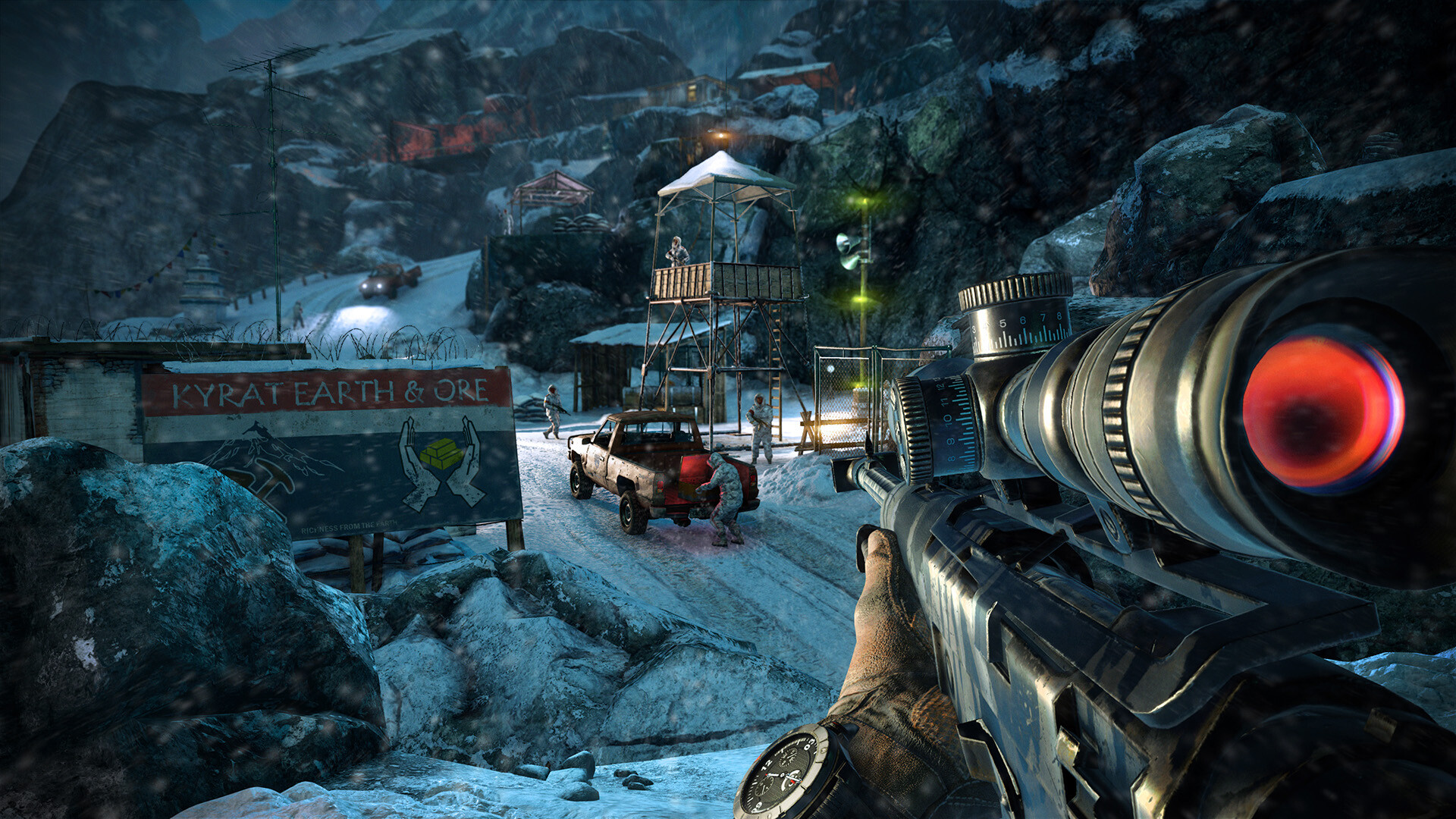
One of the things I love most about the series is precisely that freedom. We can spend several minutes observing an enemy base, marking targets, planning a silent infiltration, and eliminating every guard without being seen. Or we can simply go in guns blazing and deal with the consequences. Both approaches work, and both manage to be fun.
The new tools introduced help expand those possibilities even further. The grappling hook adds greater verticality to exploration and makes perfect sense in a setting dominated by mountains. The wingsuit remains one of the most enjoyable ways to cover long distances, while the Buzzer offers a freedom of movement that quickly becomes indispensable.
The design of missions and enemy bases also deserves praise. There are almost always several ways to reach your objectives, which helps stave off any sense of repetition. Even when we're doing similar activities, the freedom of approach means they rarely feel exactly the same.
Another element that continues to work really well is the constant presence of wildlife. Just like in the previous game, we never know exactly what might happen while we're exploring. A simple skirmish against enemies can quickly turn into total chaos when a tiger, a bear, or an elephant shows up in the middle of the fight. These are unpredictable moments that help make the world feel alive and unscripted.
Even so, despite all these qualities, Far Cry 4 can't escape some weaknesses.
The story starts off quite interesting. Ajay Ghale's arrival in Kyrat and the first encounter with Pagan Min are memorable and immediately spark the player's curiosity. Pagan is a charismatic, extravagant character who's impossible to ignore whenever he appears on screen.
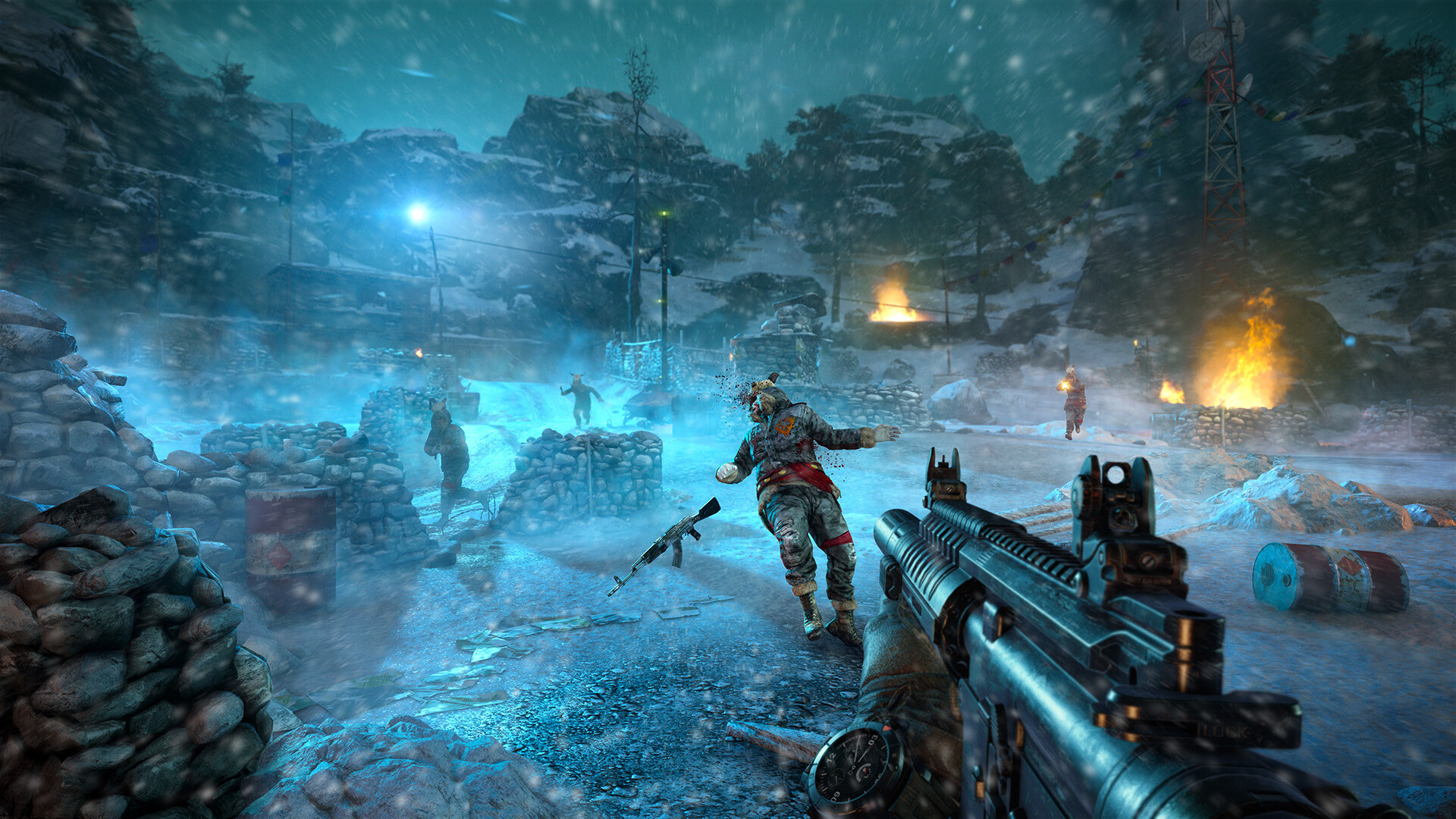
The problem is that, unlike Vaas in Far Cry 3, I never felt the same emotional connection to the central conflict. While Jason Brody's journey created clear motivations for facing its antagonists, here the situation feels less natural. At several points I found myself wondering about the real reason that drives Ajay to get so deeply involved in that civil war.
Pagan Min is an excellent villain in terms of presence and personality, but the game doesn't always manage to justify the protagonist's obsession with bringing him down. That ends up draining some emotional weight from certain story beats.
I also felt the story loses steam as it approaches the finale. There are characters with interesting potential who never get the development they need to leave a truly lasting mark. Some important events pass by too quickly, and there's a lingering sense that certain relationships could have been explored further.
During my playthrough I also ran into occasional technical issues. The crashes weren't frequent enough to compromise the adventure, but they happened often enough to be noticed. It's always frustrating when you're fully absorbed in a session and forced to interrupt everything because of a problem like that.
Fortunately, those moments were the exception rather than the rule. Most of the time, the experience remained stable and enjoyable.
In the end, Far Cry 4 leaves a very positive impression. It may not have the same revolutionary impact as Far Cry 3, but it never tried to completely reinvent the formula either. Instead, it chose to improve what already worked, offering more freedom, more tools, and one of the series' best settings.
The story could have been more consistent, and the protagonist's motivation doesn't always fully convince, but the quality of the gameplay makes up for most of those flaws. When combat, exploration, and freedom of approach work this well, it becomes easy to spend dozens of hours in Kyrat without noticing the time pass.
For me, Far Cry 4 represents exactly what a good sequel should be. It doesn't change everything just to seem different, but it also doesn't settle for simply repeating what came before. It may not surpass its predecessor in every aspect, but it builds on its foundations intelligently and delivers an adventure that's still worth playing many years after release.
And even if Far Cry 3 continues to hold a special place in many players' memories, Kyrat proves there was still plenty of room for the series to grow.
out of 10
Pros
| Cons
|
Game Far Cry 4 Released 2014 Available on PC · PlayStation 3 · PlayStation 4 · Xbox 360 · Xbox One Reviewed on PlayStation 4 | 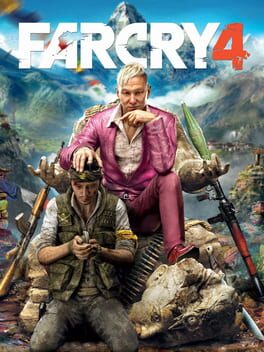 Cover: IGDB |
| PL | Pedro Lopes Writer · Portugal |
A games writer from Portugal running on a highly irresponsible amount of coffee — his blood type is officially "espresso". He has been a content creator at Lisbon Games Week, a jury member at Over & Out ’25 and an attendee of DevGAMM Lisbon 2025 (mostly for the free coffee). He has a Pac-Man tattoo on his finger, which contractually obliges him to chase ghosts forever.