
Before anything else, a disclosure is in order: this review is inevitably biased. Far Cry 3 isn't just a game I like. It's one of my favorite games of all time — to the point that my first tattoo was inspired by it. So if you're looking for complete objectivity, you're probably in the wrong place.
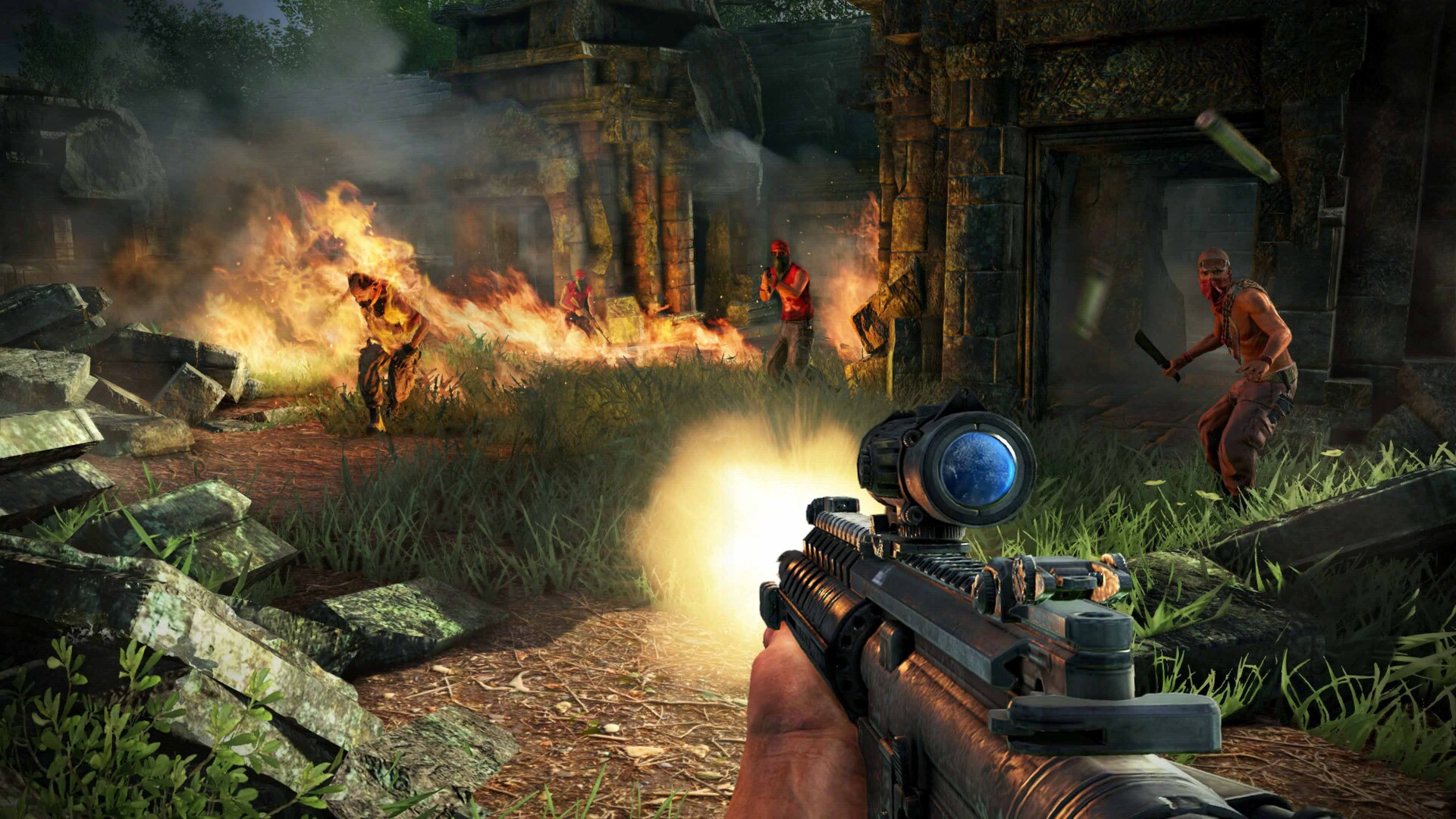
This was my ninth playthrough. Yes, ninth. By this point I know the Rook Islands better than many streets in my own city. I know where the outposts are, I'm familiar with shortcuts I'd forgotten even existed, and I can anticipate certain story moments almost to the second. And even so, I had as much fun as if it were my first time.
This time I decided to add a different goal to the experience: earning the platinum trophy. Normally when I return to Far Cry 3 I focus on the main story and a few side activities. But this time I wanted to explore everything the game had to offer. And the truth is, it was an excellent decision.
The hunt for collectibles took me to areas of the map I had never explored carefully. I discovered hidden caves, abandoned locations, and little environmental details that had completely passed me by for years. It's impressive how a game I know this well still managed to surprise me.
The Classic Edition is exactly what it promises to be: a modernized version of the 2012 classic. There's no deep remaster here and no revolutionary improvements. The visuals received some tweaks and the overall presentation is cleaner, but it's still essentially the same game that defined a generation.
And honestly? For me, that's not a problem.
Far Cry 3 still has an incredibly strong visual identity. Even more than ten years on, there's something special about that contrast between the islands' tropical paradise and the gradual descent into madness that accompanies Jason Brody's journey.
At the beginning, everything seems almost like a dream. Idyllic beaches, lush vegetation, postcard landscapes. But as we press on, we begin to realize there's something deeply disturbing behind all that beauty. It's a world that looks welcoming from a distance but grows increasingly hostile as we start to explore it.
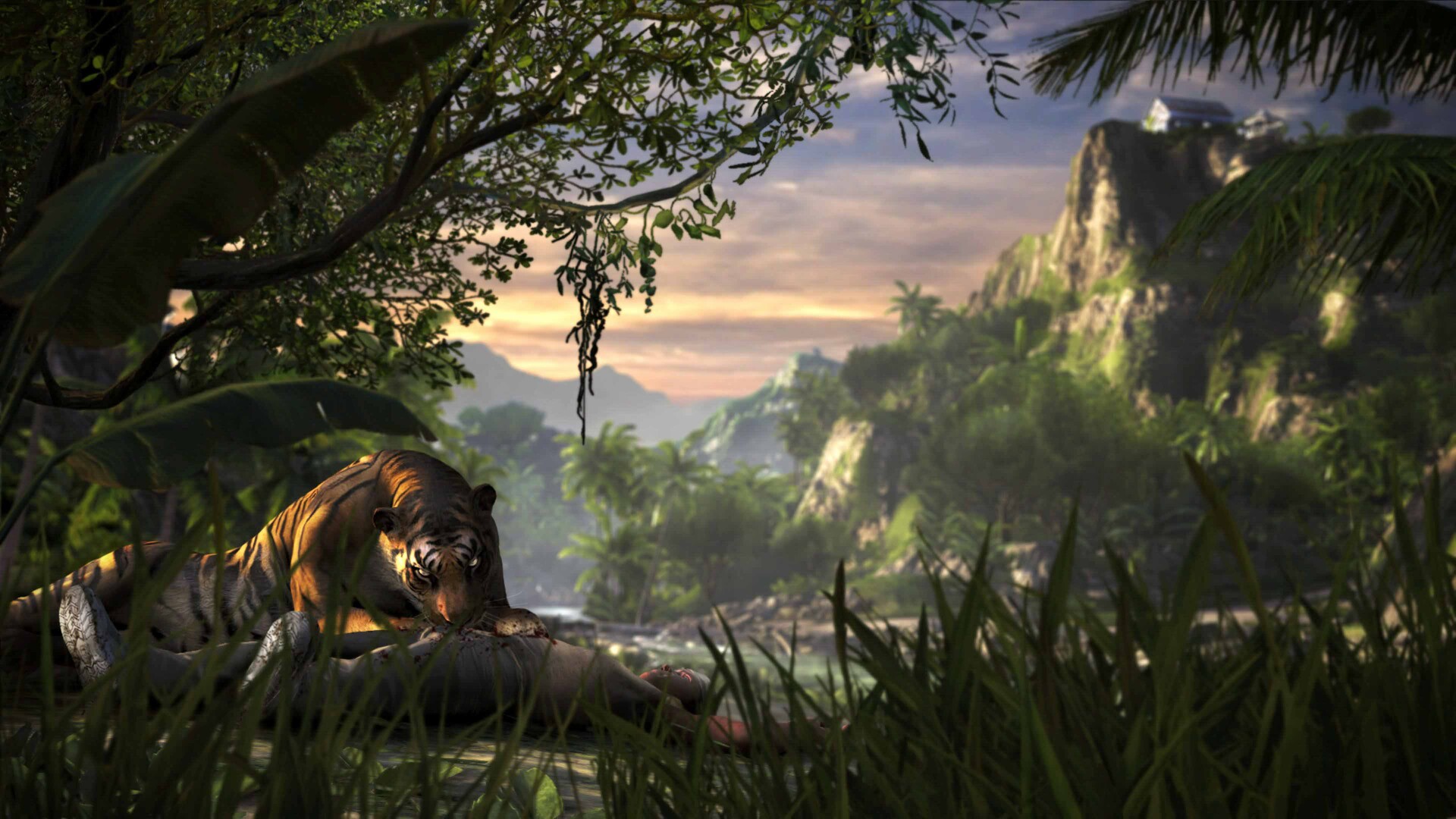
The atmosphere remains one of the aspects I admire most about the game. Few open worlds convey that constant sense of tension so well. We never know when we'll run into pirates, a tiger hidden in the vegetation, or simply a completely chaotic situation created by the interaction of the game's systems.
And speaking of chaos, this time I encountered more bugs than I remembered from the original version. Fortunately, nothing that seriously hurt the experience. On the contrary, some moments ended up being unintentionally hilarious.
Watching enemies get launched through the air with no apparent explanation, or seeing a bear stuck in a tree while desperately trying to attack me, provided a few unexpected laughs. These are flaws that shouldn't exist, of course, but they weren't enough to diminish the quality of the experience.
But let's talk about the elephant in the room.
Or rather, the psychopath in the room.
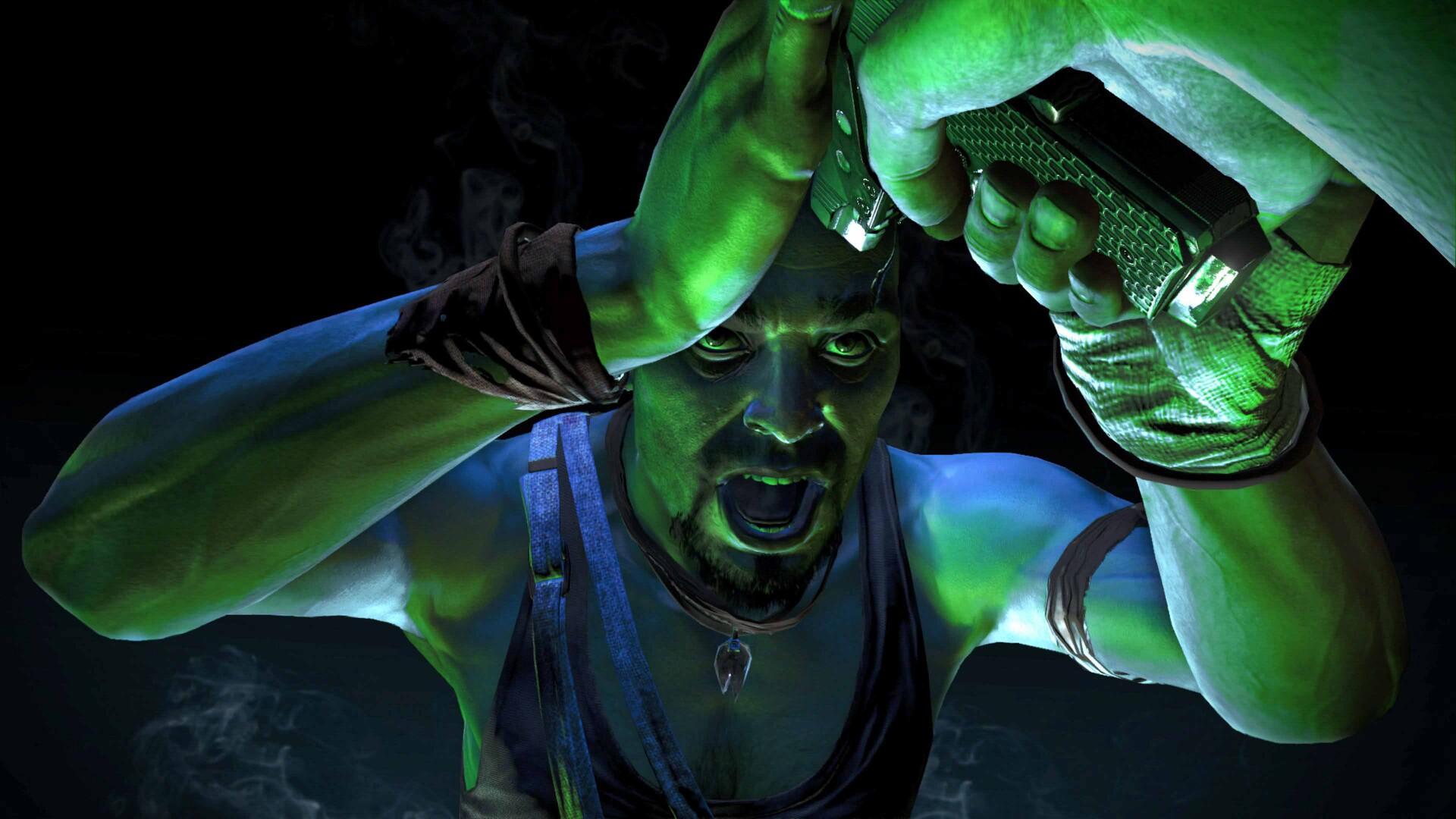
Vaas Montenegro remains, for me, the greatest villain in video game history.
Yes, I know that claim sparks endless debate. I know there are other names frequently mentioned. But I still believe exactly the same thing after almost a decade and a half.
Michael Mando's performance is simply extraordinary. Vaas manages to be charismatic, frightening, unpredictable, and fascinating all at once. Every time he appears on screen, we feel something could go terribly wrong at any moment.
There are more powerful villains, smarter ones, more complex ones. But few manage to dominate a narrative the way Vaas does. Even in relatively short scenes, the player's attention is immediately captured.
And yes, the famous line about the definition of insanity remains as memorable today as it was in 2012.
But this time I also paid more attention to a character who usually ends up living in Vaas' shadow: Hoyt Volker.
The truth is that Hoyt deserves more recognition than he usually gets. He may not have Vaas' explosive energy or the same immediate impact, but he works very well as an antagonist. He's more calculating, colder and, in a way, even more frightening. While Vaas represents pure chaos, Hoyt represents absolute control. And that difference ends up making the second half of the narrative more interesting than many give it credit for.
The story remains one of the game's great highlights. Jason Brody's transformation is still extremely well constructed. The way an apparently ordinary young man gradually adapts to violence and to the environment around him remains one of the best examples of character development Ubisoft has ever produced.
The soundtrack is also still impeccable.
There are more contemplative moments, where the music reinforces the sense of isolation and discovery, but it's impossible not to mention the legendary plantation mission set to Make It Bun Dem. It's still one of the most memorable sequences I've ever played — the kind that stays etched in your memory for years.
It's a moment that perfectly sums up what Far Cry 3 does so well: explosive action, excellent pacing, and a brilliant use of music to amplify everything that's happening.
If I have to point to something truly negative about this version, it would be the absence of some content from the original edition.
The lack of the co-op mode and the map editor is a shame. They were components that added considerable value to the original package and helped extend the game's longevity even further. They aren't essential to enjoying the main campaign, but they are missed.
Even so, during this new playthrough I was too busy exploring caves, completing challenges, hunting for lost war letters, and fleeing Komodo dragons to truly feel their absence.
In the end, Far Cry 3: Classic Edition remains exactly what it has always been: a masterpiece.
It isn't the definitive version many fans dreamed of getting. It could have received more technical improvements, more content, and a more ambitious treatment. But the foundation is still so strong that even those limitations can hardly dent the impact of the experience.
Few games manage to combine narrative, exploration, progression, and freedom of approach this well. Even fewer manage to remain this relevant more than a decade after release.
Maybe part of this opinion is pure nostalgia. Maybe the tattoo doesn't help with impartiality. But after nine playthroughs, dozens of hours spent on the Rook Islands, and a platinum finally earned, I still feel exactly what I felt the first time I finished the game.
Far Cry 3 isn't just one of Ubisoft's best games.
It's one of the best open worlds ever created.
And for me, it continues to deserve — without any hesitation — a solid and deeply sentimental 5 stars out of 5.
out of 10
Pros
| Cons
|
Game Far Cry 3: Classic Edition Released 2018 Available on PlayStation 4 · Xbox One Reviewed on PlayStation 4 | 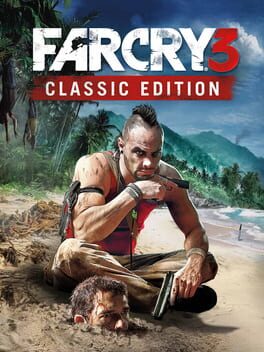 Cover: IGDB |
| PL | Pedro Lopes Writer · Portugal |
A games writer from Portugal running on a highly irresponsible amount of coffee — his blood type is officially "espresso". He has been a content creator at Lisbon Games Week, a jury member at Over & Out ’25 and an attendee of DevGAMM Lisbon 2025 (mostly for the free coffee). He has a Pac-Man tattoo on his finger, which contractually obliges him to chase ghosts forever.