
In Sound Mind was one of the biggest surprises I've had within the horror genre in recent years. At a time when the market is flooded with experiences that seem to follow the exact same formula — dark corridors, predictable scares, and monsters that rely more on jump scares than on genuine tension-building — this indie managed to stand out through its originality, the quality of its narrative, and the intelligent way it approaches complex themes without ever losing its identity.
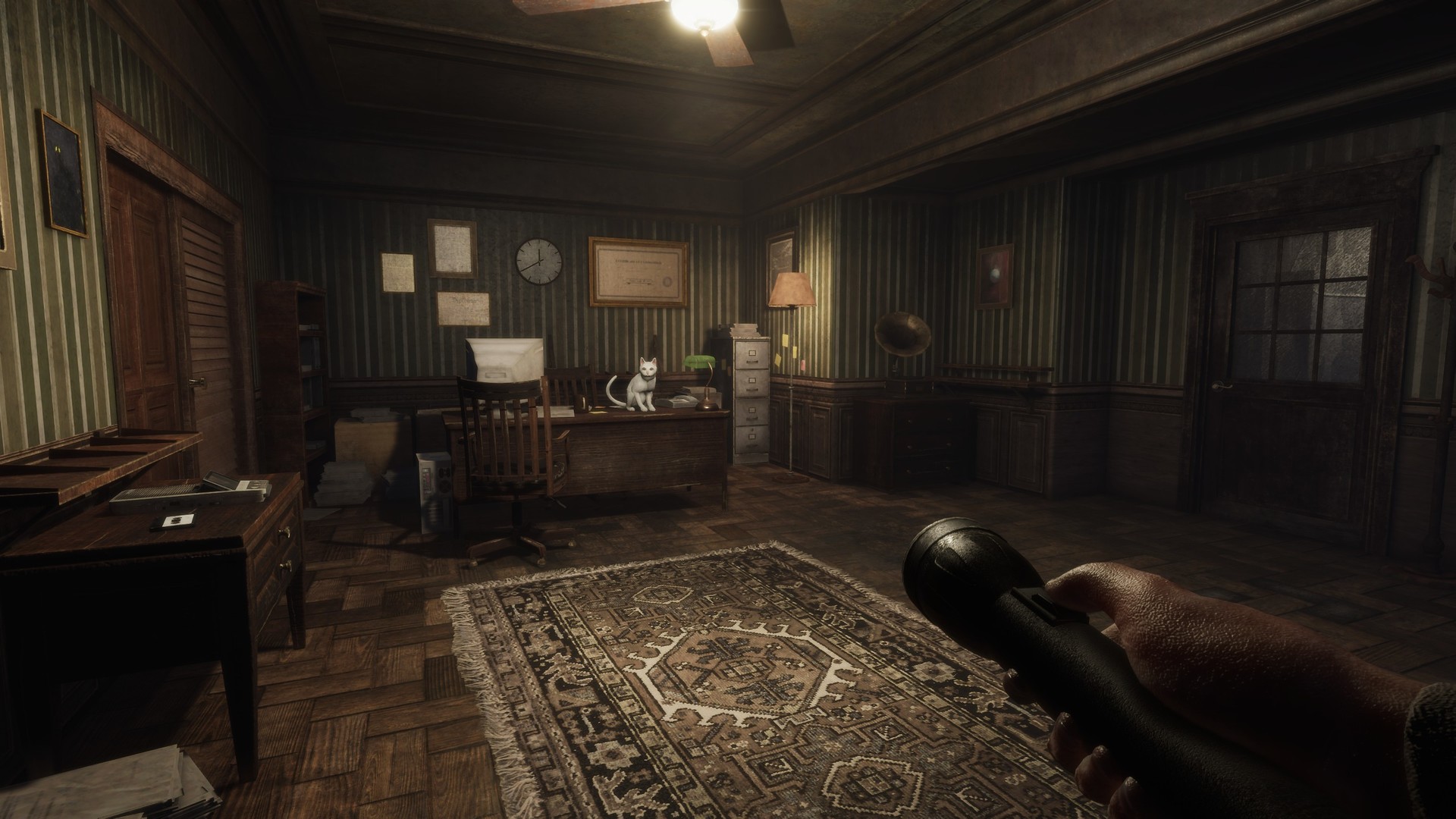
From the very first minutes, there's a constant sense of discomfort. Not the immediate fear provoked by cheap scares, but a persistent unease that accompanies you throughout the entire adventure. The world of In Sound Mind seems to constantly challenge our perception of reality, creating an environment where we're never quite sure what's real, what's memory, or what's simply a product of the disturbed minds of the characters we encounter.
The story is, without a doubt, one of its greatest assets. Without going into details that could spoil the experience for those who haven't played it, the game addresses delicate themes related to mental health, trauma, and psychiatric conditions in a surprisingly respectful and humane way. Instead of using these conditions merely as horror material, it seeks to explore the impact they have on people's lives and how they're so often misunderstood or judged by society.
The most interesting part is how each character has their own narrative and their own demons to face. Over the course of the adventure we dive into the memories and struggles of different individuals, gradually understanding the events that shaped their lives. It's impossible not to feel empathy for some of these stories, even when we're surrounded by unsettling environments and disturbing events.
There's enormous care in the construction of these characters. None of them seems to exist merely to serve the main narrative. Each has their own identity, personal conflicts, and understandable motivations. As we progress, we begin to realize that the monsters we face are often symbolic representations of their fears, traumas, and insecurities — something that adds an extra layer of depth to the experience.
The narrative, however, isn't perfect. At certain points I felt the pacing could have been slightly tighter. There are sections that stretch a little longer than necessary, and certain segments end up slightly breaking the adventure's dynamism. That said, what initially seems like excess often turns out to have a purpose later on. Almost everything in In Sound Mind works as a metaphor or carries a hidden meaning, rewarding the most attentive players.
Gameplay is another of the aspects that surprised me most. Many horror games limit themselves to walking the player from one location to another while they solve relatively basic puzzles. Here, the developers opted for something considerably more creative.
The mechanics introduced over the course of the campaign are constantly renewed, and we rarely feel like we're simply repeating tasks. Each area presents its own challenges and new ways of interacting with the environment, forcing us to adapt how we think. There's a constant feeling of discovery that keeps the gameplay from ever becoming monotonous.
The puzzles deserve a special mention. They're clever without being excessively frustrating, managing to strike an almost perfect balance between difficulty and reward. I often spent several minutes trying to figure out the solution to a particular challenge, only to feel enormous satisfaction when everything finally clicked. It's the kind of design that rewards observation, logic, and creativity without ever resorting to absurdly complicated solutions.
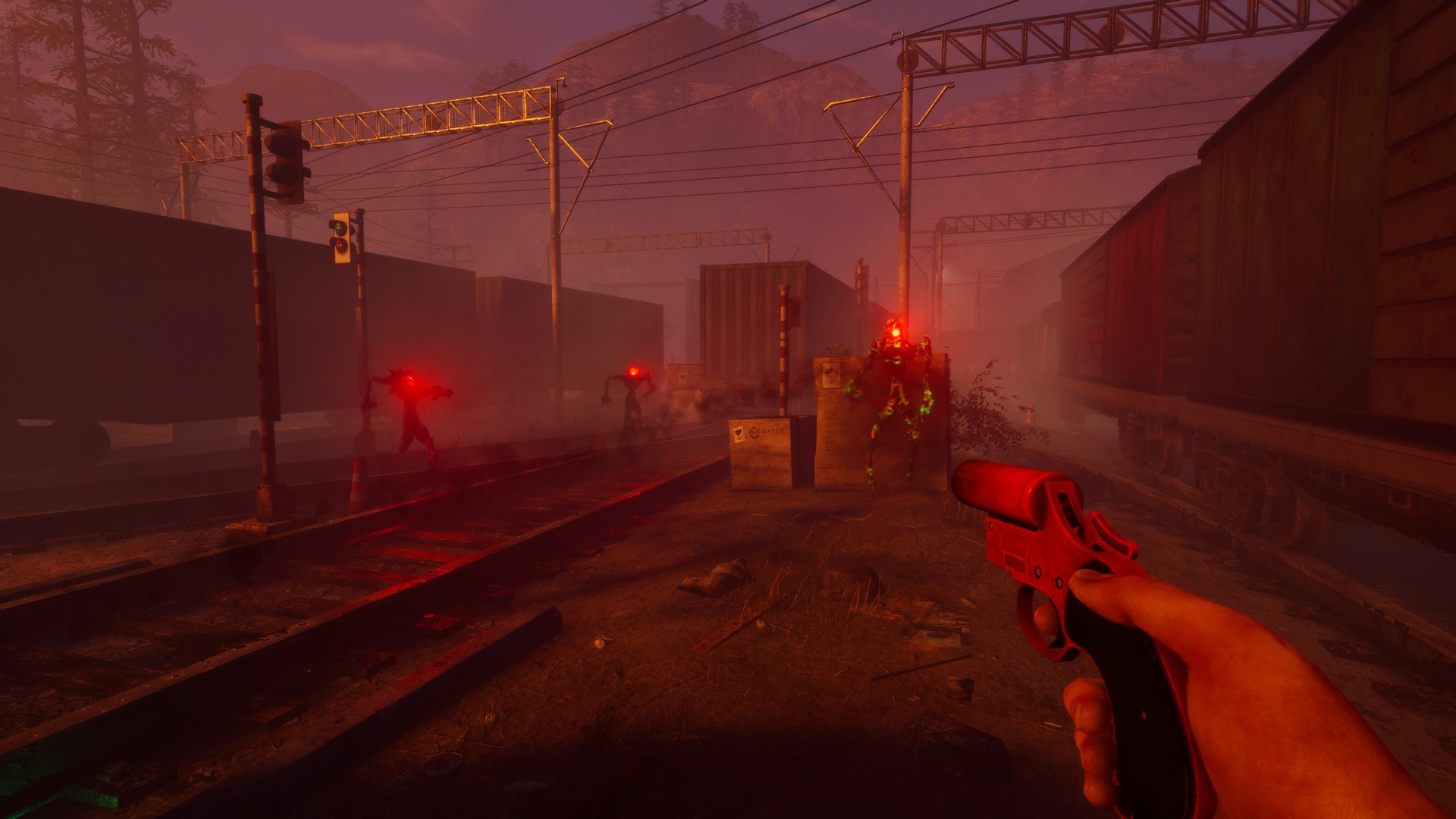
The horror also works precisely because it doesn't depend exclusively on scares. The atmosphere does much of the work. The environments are packed with strange details, disturbing elements, and subtle changes that keep the player constantly on edge. We never know exactly what to expect when opening a door or turning a corner.
Visually, the game doesn't compete with the industry's big AAA productions, but it more than compensates through its art direction. Every environment has a very distinct identity, and the different representations of the characters' traumas result in some of the most creative settings I've found in an indie horror game.
The use of color, lighting, and visual effects helps reinforce the experience's psychological tone. There are genuinely unsettling moments that stay in your memory long after you've finished a play session.
But if there's one element that elevates In Sound Mind to another level, that element is its soundtrack.
The involvement of the band The Living Tombstone proved to be an absolutely brilliant choice. The songs created for the game don't merely serve as musical accompaniment — they function as extensions of the characters' own stories. Each track helps deepen the emotional context of events and adds an extra dimension to the narrative.
These are incredibly memorable themes, capable of conveying sadness, anxiety, anger, or hope depending on the context. Few games manage to integrate music so organically into the overall experience. To this day I can still recall several of those songs — something that rarely happens after finishing a game.
Another aspect that deserves praise is how the game balances tension, mystery, and emotion. There are frightening moments, of course, but there are also surprisingly human, moving passages. That mixture ensures the experience never becomes predictable and keeps the player constantly engaged.
In the end, In Sound Mind turned out to be much more than just another horror game for me. It was a creative, intelligent, and emotionally engaging experience that managed to address complex themes through an intriguing narrative and innovative mechanics.
Despite a few minor pacing issues, the quality of the story, the puzzles, the atmosphere, and the soundtrack make it one of the most memorable indies I've played in recent years.
It's precisely the type of game that proves you don't need million-dollar budgets to create something special. All it takes is a good idea, creativity, and the courage to do something different.
For anyone looking for a psychological horror experience that goes beyond easy scares and offers a genuinely interesting narrative, In Sound Mind is an easy recommendation. And after finishing such a peculiar journey, I can only hope that one day a sequel will let me return to this strange, disturbing, and fascinating world.
out of 10
Pros
| Cons
|
Game In Sound Mind Released 2021 Available on PC · PlayStation 5 · Xbox Series X|S · Nintendo Switch Reviewed on Xbox Series X|S | 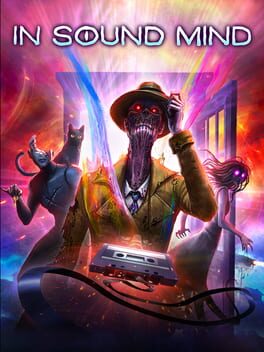 Cover: IGDB |
| PL | Pedro Lopes Writer · Portugal |
A games writer from Portugal running on a highly irresponsible amount of coffee — his blood type is officially "espresso". He has been a content creator at Lisbon Games Week, a jury member at Over & Out ’25 and an attendee of DevGAMM Lisbon 2025 (mostly for the free coffee). He has a Pac-Man tattoo on his finger, which contractually obliges him to chase ghosts forever.